If you’ve ever flipped on a kitchen light and still squinted at your cutting board, you already understand the problem under-cabinet lighting solves. These are fixtures mounted on the underside of your upper cabinets, aimed straight down at your work surface — filling in the shadow your own body casts when you stand at the counter. There are two main ways to wire them: plug-in linkable bars, which run a cord to a standard wall outlet (often hidden inside the cabinet above), and direct-wire fixtures, which connect permanently to your home’s electrical wiring with no visible cord or outlet. This article breaks down what each format actually delivers, which products stand out based on published specs and aggregated owner feedback, and how to make the call for a real kitchen — whether you’re managing your own renovation or spec’ing lighting for a client.
| EDITOR'S PICKAnsen Hardwired Under Cabinet L… | Mid-tierLitever Under Cabinet LED Light… | Budget pickLeetdud Under Cabinet Lighting… | |
|---|---|---|---|
| Length | 48in | 6 × 12in | 16in |
| Power | 26W | 31W | — |
| Brightness | 1720lm | 2000lm | — |
| Color temp | 2700K–5000K (5) | — | 3000K/4000K/5000K (3) |
| Wiring | Hardwired | Plug or wired | Plug-in linkable |
| Price | $59.99 | $47.59 | $19.99 |
| See on Amazon → | See on Amazon → | See on Amazon → |
The Core Tradeoff: Cord Management vs. Electrical Work
Let’s name the tradeoff plainly so you can stop second-guessing it.
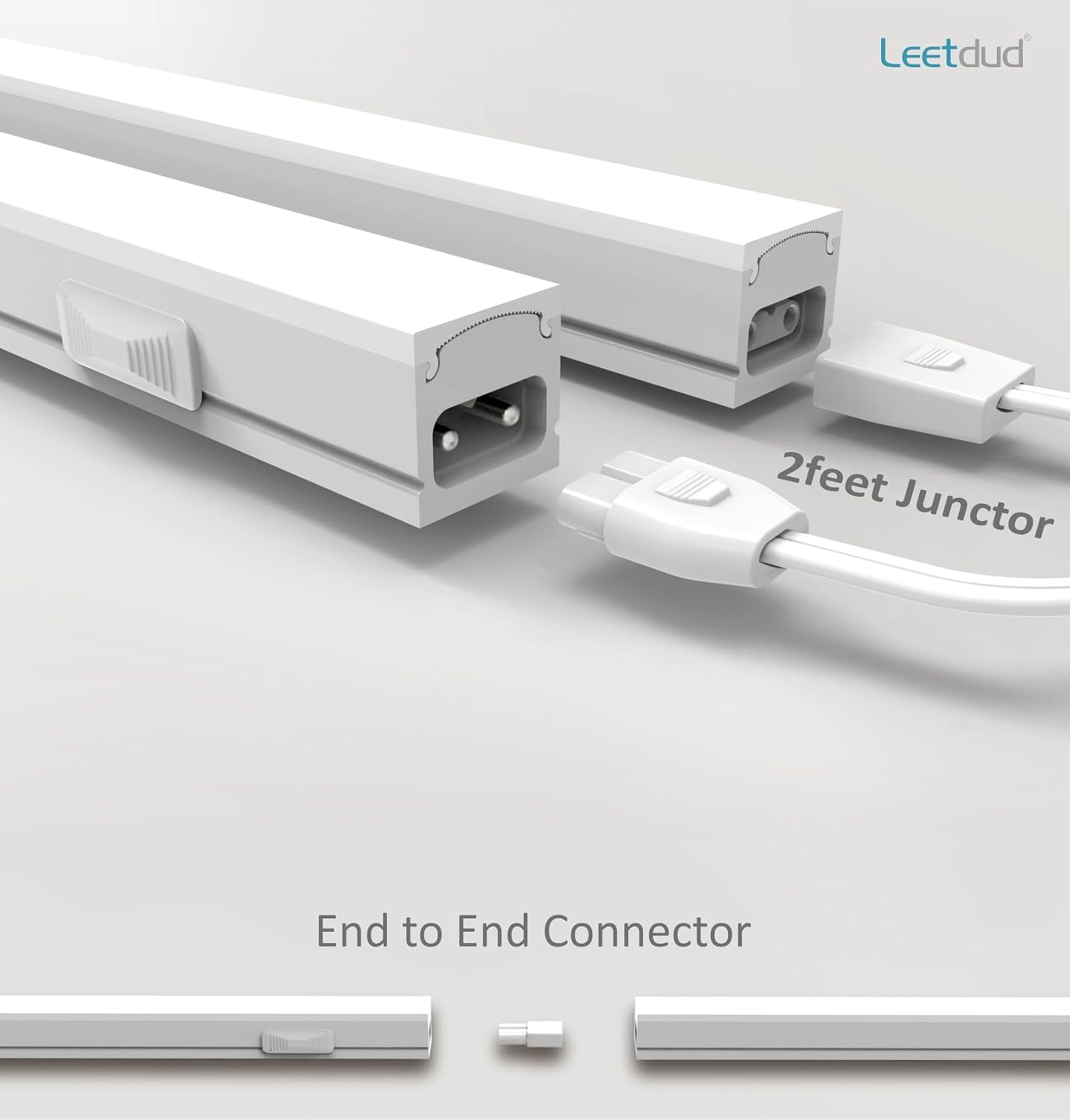
Plug-in linkable systems connect multiple light bars in a chain — typically two to six units — sharing one power cord that plugs into an outlet. The outlet is usually inside the upper cabinet, so the cord drops through a small hole drilled in the cabinet floor and disappears. The appeal is obvious: no licensed electrician required in most jurisdictions, no junction boxes, and you can reconfigure or remove the lights if you move. The limitation is equally plain: you are dependent on outlet placement, and if anything goes wrong with the chain — a loose connector, a failing driver — the whole run can go dark.
Direct-wire (hardwired) fixtures connect to a dedicated circuit or an existing circuit in your wall, terminated inside a standard junction box. There are no visible cords, no outlet dependency, and the installation looks like it was always there. The honest tradeoff: in most jurisdictions, connecting wiring to a junction box is electrical work that requires either a licensed electrician or a homeowner permit, depending on local code. Family Handyman’s under-cabinet lighting installation guide notes that most municipalities classify this as a permitted electrical alteration — worth confirming before your client or homeowner attempts it without a permit pull.
The practical decision frame:
- Replacing old fluorescent fixtures that already have a junction box in the wall? Direct-wire is a clean retrofit with minimal added cost — the rough wiring is already done.
- New construction or a cabinet install with no existing wiring at that location? Either run new wire (electrician cost: typically $150–$400 depending on run length and local labor rates as of mid-2026) or use plug-in linkable and route to an existing outlet inside the cabinet.
- Client wants zero visible cords, permanently, and is selling in three to five years? Direct-wire reads as a finished, permanent installation in any appraisal or buyer walkthrough.
By the Numbers
| Format | Avg. Installed Cost (10-ft run) | Electrician Required? | Visible Cord? | Dimmable? |
|---|---|---|---|---|
| Plug-in linkable | $40–$120 (fixtures only) | No (in most cases) | Depends on outlet placement | Product-dependent |
| Direct-wire | $60–$180 (fixtures) + $150–$400 labor | Usually yes for new circuit | No | Product-dependent |
These ranges reflect mid-2026 pricing based on published product listings and regional electrician rate surveys. Your actual numbers will vary by market.
Product Comparisons: What Owner Reviews and Published Specs Actually Tell Us
The four products below keep surfacing across aggregated Houzz owner reviews and roundups published by Apartment Therapy. Here is what the evidence supports — organized by tier so you can match the pick to your project scope.
Litever LED Under-Cabinet Lighting Kit
Leetdud
$19.99
In stock on Amazon
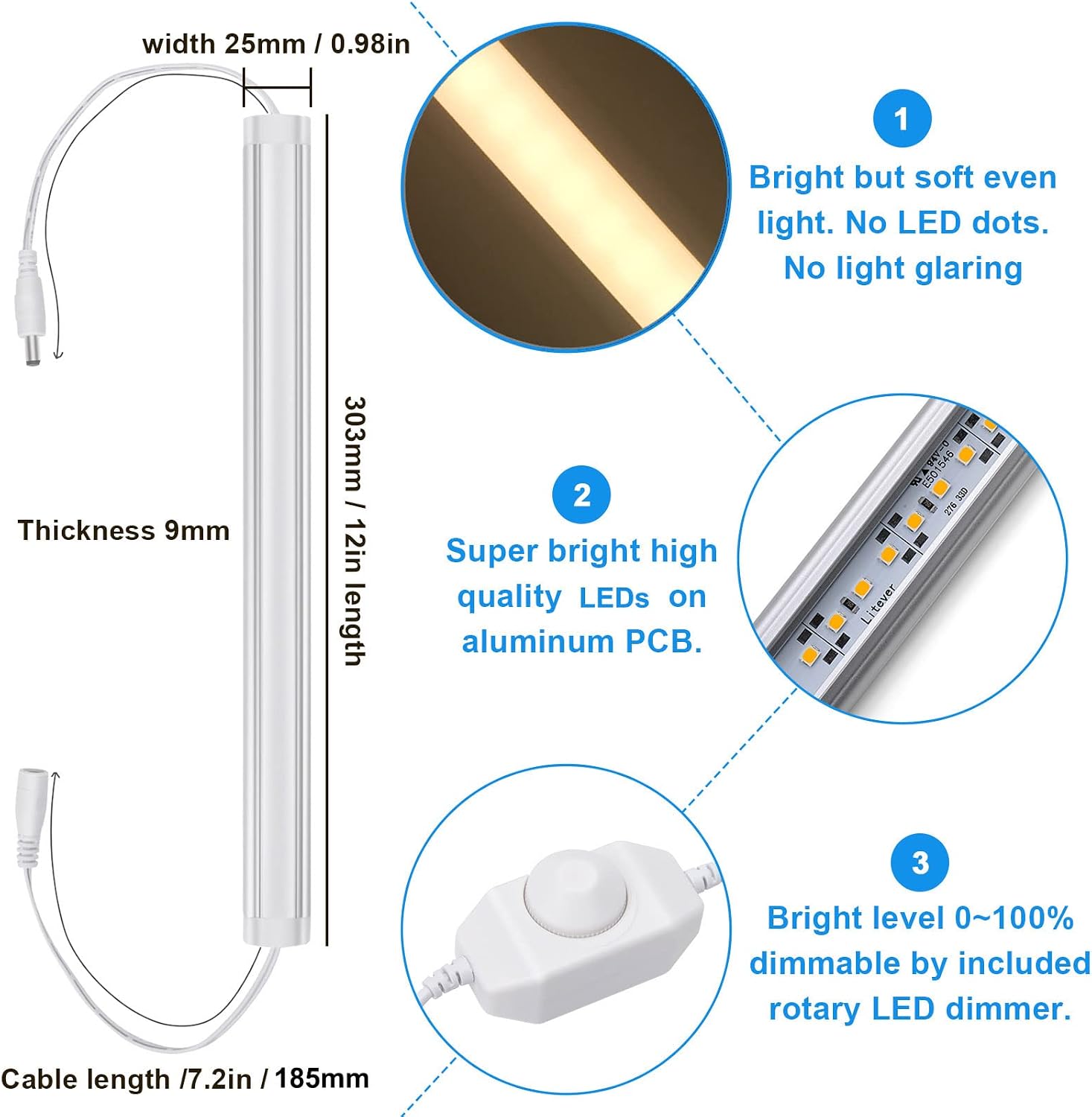
Check price on AmazonThe Litever kit generates consistently enthusiastic owner feedback, and the specific praise is worth noting: buyers repeatedly call out the completeness of the package. Aggregated Houzz listings for the Litever system show owners cataloguing every included accessory — connectors, mounting clips, driver, screws — and concluding with unambiguous recommendations. That level of detail in a positive review is meaningful signal. It tells you that buyers in this category have been burned by incomplete kits that ship fixtures without mounting hardware, or power supplies that don’t match the listed wattage. Litever appears to have addressed the “what did I forget to order?” problem that plagues budget LED bar kits.
On smart-home integration: at least one Litever buyer noted they wanted app-based control, accepted the included inline dimmer-and-switch solution, and found it workable. Plug-in linkable LED bars at this price point are not smart-home devices. They will not integrate natively with Alexa or Google Home ecosystems. If that is a project requirement, you are looking at a different product category — Philips Hue or similar — at roughly three to four times the cost. For a standard kitchen renovation where the goal is good task lighting with simple on/off and dim control, the Litever system delivers at a budget-friendly price point.
Best for: DIY installers, rental units, kitchens where an existing outlet is accessible inside the upper cabinet, and projects where budget is the primary constraint.
Leetdud
$19.99
In stock on Amazon
Check price on AmazonNicor LED Under-Cabinet Light with CCT Switch
Litever
$47.59
In stock on Amazon
Check price on AmazonNicor earns specific praise for two features that matter most in retrofit situations.
1. The CCT sliding switch. CCT stands for Correlated Color Temperature — the warmth or coolness of the light measured in Kelvin (lower number equals warmer/more yellow; higher number equals cooler/more blue-white). A sliding CCT switch lets you move between settings — typically 2700K (warm white), 3000K (neutral white), and 4000K (cool white) — without replacing the fixture. For a kitchen where the owner is uncertain whether their existing overhead lighting reads warm or cool, this is a genuinely useful hedge.
2. Retrofit compatibility with old fluorescent fixture mounting holes. Aggregated Houzz reviews for the Nicor specifically note that its mounting pattern aligns with the screw spacing of fluorescent under-cabinet fixtures from the early 2000s. If you are replacing a kitchen that still has those long, buzzing fluorescent bars, the Nicor appears to drop in without re-drilling. This detail saves 30 minutes and a round of spackle on a flip or a renovation with tight scheduling.
This Old House’s published guidance on under-cabinet lighting installation confirms that direct-wire low-voltage LED fixtures vary significantly in how clearly they label their line-voltage connections. The Nicor’s reviewer consensus suggests it passes that bar — installers report the wiring labels as clear and the junction-box clearances as adequate for standard retrofit boxes.
Best for: Fluorescent retrofits, kitchens where color temperature is uncertain, and mid-budget projects where direct-wire quality is desired without the premium fixture price.
Litever
$47.59
In stock on Amazon
Check price on AmazonAnsen Direct-Wire LED Under-Cabinet Light
Ansen
$59.99
In stock on Amazon
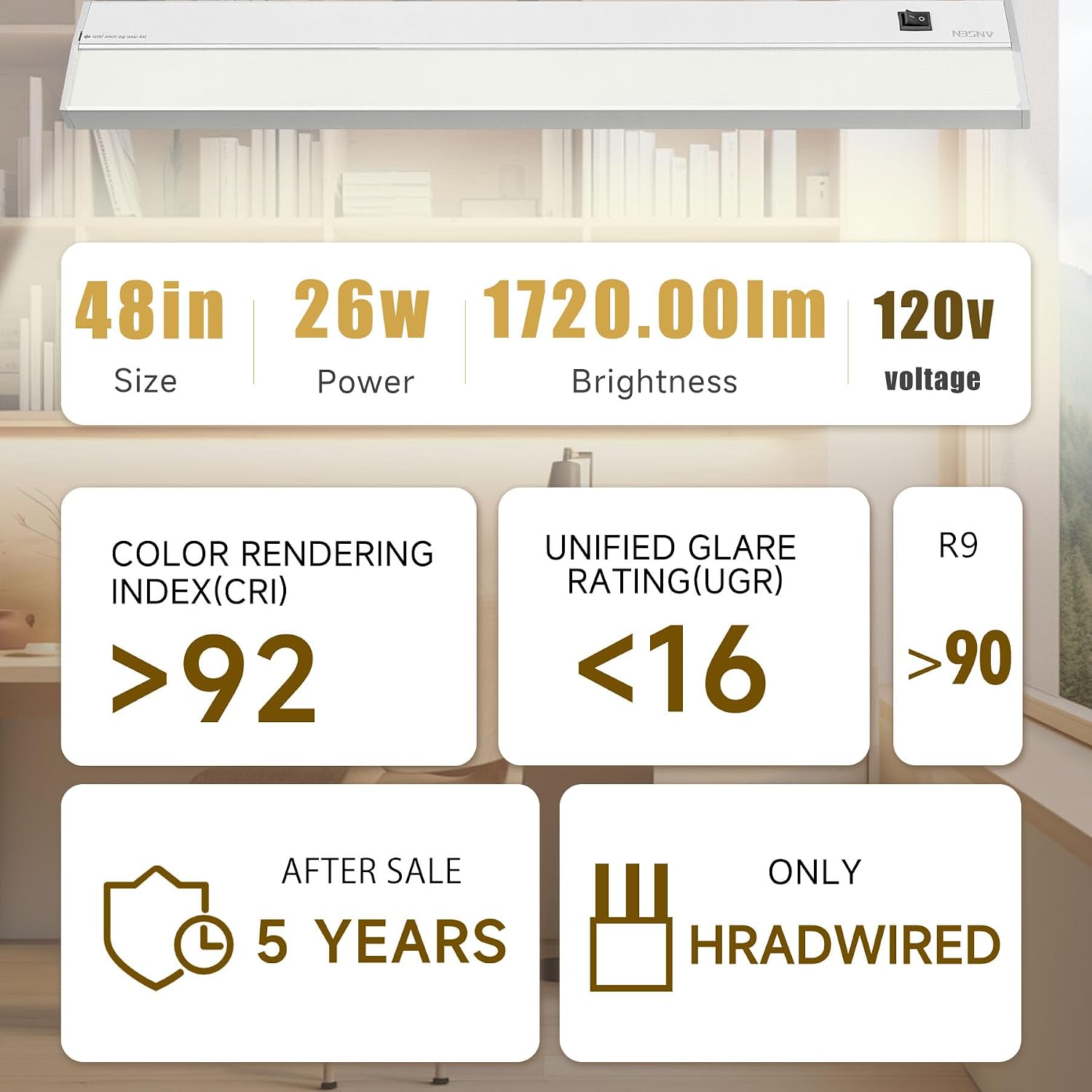
Check price on AmazonThe Ansen fixture earned a notable piece of credibility in aggregated reviews: a self-identified retired union electrician reviewed it and found the installation straightforward. We are not overstating that — one reviewer’s credential does not validate a product universally. But a retired union electrician who bothers to review a consumer LED fixture and calls the wiring intuitive is a different signal than a generic “easy to install” comment from someone whose electrical experience is unknown. This Old House’s under-cabinet lighting guidance notes that direct-wire LED fixtures vary meaningfully in how well they communicate line-voltage connection points to the installer — the Ansen appears to perform well on that dimension based on reviewer consensus.
The Ansen is positioned as the clean, permanent solution: no cords, no outlet dependency, professional-grade finish. If you are spec’ing this for a client whose licensed electrician will do the final connection, Ansen is a sound choice. The output is clean, the format is direct-wire, and the installation documentation is unlikely to frustrate a professional.
Best for: New construction, premium renovations, clients who will have a licensed electrician on-site, and any project where long-term appearance at resale matters.
Ansen
$59.99
In stock on Amazon
Check price on AmazonLeetdud LED Under-Cabinet Light Strip
Leetdud
$19.99
In stock on Amazon
Check price on AmazonThe Leetdud earns a candid review flag worth passing on directly: at least one owner in Houzz aggregated listings reported that the included double-sided adhesive tape was insufficient, implying supplemental tape was needed to keep the bars mounted securely long-term.
Actionable guidance: if you select Leetdud or any adhesive-mount LED bar, do not rely on the included tape as the sole mounting method on anything but a perfectly smooth, clean, painted surface. The safe play on any adhesive-only mount is to supplement with 3M VHB (Very High Bond) tape, specifically the 4910 or 5952 series, which is rated for high-surface-energy bonding on painted wood and melamine — both common cabinet underside materials. Cut strips to match the fixture width, clean the cabinet surface with isopropyl alcohol first, and press firmly for 30 seconds. VHB-mounted fixtures in a normal kitchen environment should hold for years without supplemental screws.
The Leetdud remains a viable budget strip option for shorter runs and lower-traffic kitchens, provided the adhesive gap is addressed at install time.
Best for: Short runs, secondary kitchens, and budget-constrained projects where a user is willing to supplement the included mounting hardware.
Leetdud
$19.99
In stock on Amazon
Check price on AmazonColor Temperature Matching: The Question Nobody Asks Until It’s Too Late
Getting color temperature wrong is one of the most common and most avoidable under-cabinet lighting mistakes.
- Most kitchens with incandescent or warm-white LED recessed lights are running 2700K–3000K.
- Most budget LED under-cabinet bars default to 4000K (cool white) or higher.
- If you mix a 4000K under-cabinet bar with 2700K overhead lighting, the countertop will look like it is lit by a fixture from a different room — because it effectively is.
The fix: check your existing overhead bulbs for a Kelvin rating printed on the base or packaging, then match or stay within 200K. If you cannot identify the existing temperature, buy a CCT-switchable fixture like the Nicor and tune it after install. Apartment Therapy’s roundup “The Best Under-Cabinet Lights for Every Kitchen” identifies color temperature mismatch as the most consistent installation regret reported by owners who skipped this step — a finding consistent with what Houzz aggregated reviews show across multiple product listings.
Frequently Asked Questions
Do I need an electrician to install a direct-wire under-cabinet light? In most U.S. jurisdictions, connecting a new fixture to existing junction-box wiring is classified as electrical work subject to local permit requirements. Family Handyman’s under-cabinet lighting installation guide recommends checking with your local building department before assuming a homeowner permit is sufficient. The cost of an electrician for a simple swap at an existing junction box is typically $100–$200 in labor — modest relative to the finish quality gain.
Can I link multiple plug-in bars together on one cord? Yes — linkable systems are designed for this. Most kits specify a maximum chain length, typically four to six bars per driver. Exceeding that limit overloads the power supply and shortens fixture life. Read the spec sheet for your specific kit and do not exceed the stated maximum run.
Will the included double-sided tape hold the light bars long-term? It depends on your cabinet surface and the specific tape included. As noted in the Leetdud section above, at least one owner found the included tape insufficient. The safe play on any adhesive-only mount: supplement with 3M VHB tape (series 4910 or 5952), clean the surface with isopropyl alcohol before application, and allow 24 hours of cure time before fully loading the fixture.
How do I match the color temperature of these lights to my existing kitchen lighting? Check the Kelvin rating on your existing overhead or recessed bulbs — it is printed on the bulb base or packaging. Match your under-cabinet selection within 200K, or buy a CCT-switchable fixture like the Nicor that lets you tune after install.
Are these lights compatible with a dimmer wall switch? Not automatically. LED fixtures must be rated for dimming, and the dimmer switch must be compatible with the LED driver. Most plug-in linkable bars include their own inline dimmer — using them with a separate wall dimmer can cause flicker or buzzing. Direct-wire fixtures labeled “dimmable” are compatible with leading-edge LED dimmers from brands such as Lutron or Leviton. If the spec sheet does not say “dimmable,” assume it is not.
Can plug-in linkable lights be converted to direct-wire later? Some systems offer a direct-wire conversion kit that replaces the plug-end with a wire lead for junction-box connection. This varies by brand — check with the manufacturer before buying if conversion is a future plan. Performing a retrofit hardwire conversion without the manufacturer’s kit typically voids any warranty and may not meet code if the fixture was not originally rated for direct-wire use.
The Decision Rule
If you are still holding the decision, here is the clean if/then:
- If existing junction boxes are present (fluorescent retrofit) and appearance is a priority → direct-wire, Nicor or Ansen
- If no existing wiring, client or homeowner wants a DIY install, and budget is tight → plug-in linkable, Litever kit (complete package, fewer missing-accessory surprises)
- If you are replacing fluorescents and are not sure what color temperature the kitchen runs → Nicor with CCT switch, tune after install
- If adhesive mounting only and you are near the range or dishwasher → budget $8–$12 for 3M VHB tape regardless of which fixture you select
The right under-cabinet light is not the one with the longest spec sheet — it is the one that installs cleanly, matches the existing lighting, and stays on the wall in three years. That is a solvable problem with the information above.