If you’ve ever crouched on your kitchen floor, fishing a cast-iron pan out of the back of a 24-inch-deep base cabinet while pots avalanche around your arm, you already understand why pull-out cabinet organizers exist. A pull-out organizer is simply a shelf or basket mounted on drawer slides — the same hardware that makes your silverware drawer glide open — so that instead of digging into a dark cabinet, you slide the whole contents toward you. There are two broad types worth comparing: expandable-width organizers, which telescope to fit a range of cabinet openings, and fixed roll-out shelves, which are built to a specific width and typically screwed into the cabinet box. Both solve the same fundamental problem, but they solve it differently, and choosing the wrong one for your situation costs you money and a second trip to the hardware store. This article walks you through the real tradeoffs, names the installation gotchas reviewers wish they’d known, and ends with a clear decision rule.
What You’re Actually Choosing Between
Before getting into specs, it helps to picture the two product families clearly.
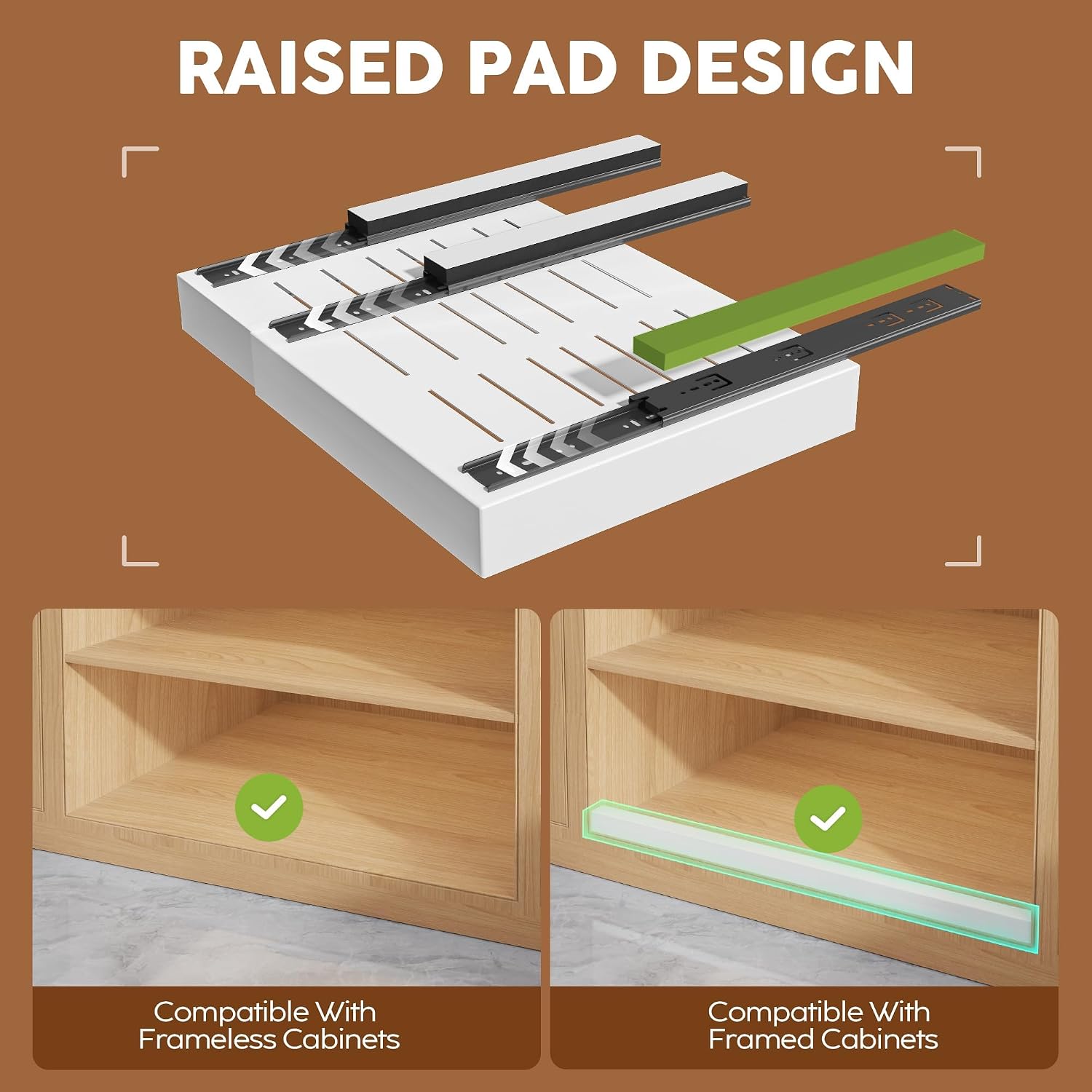
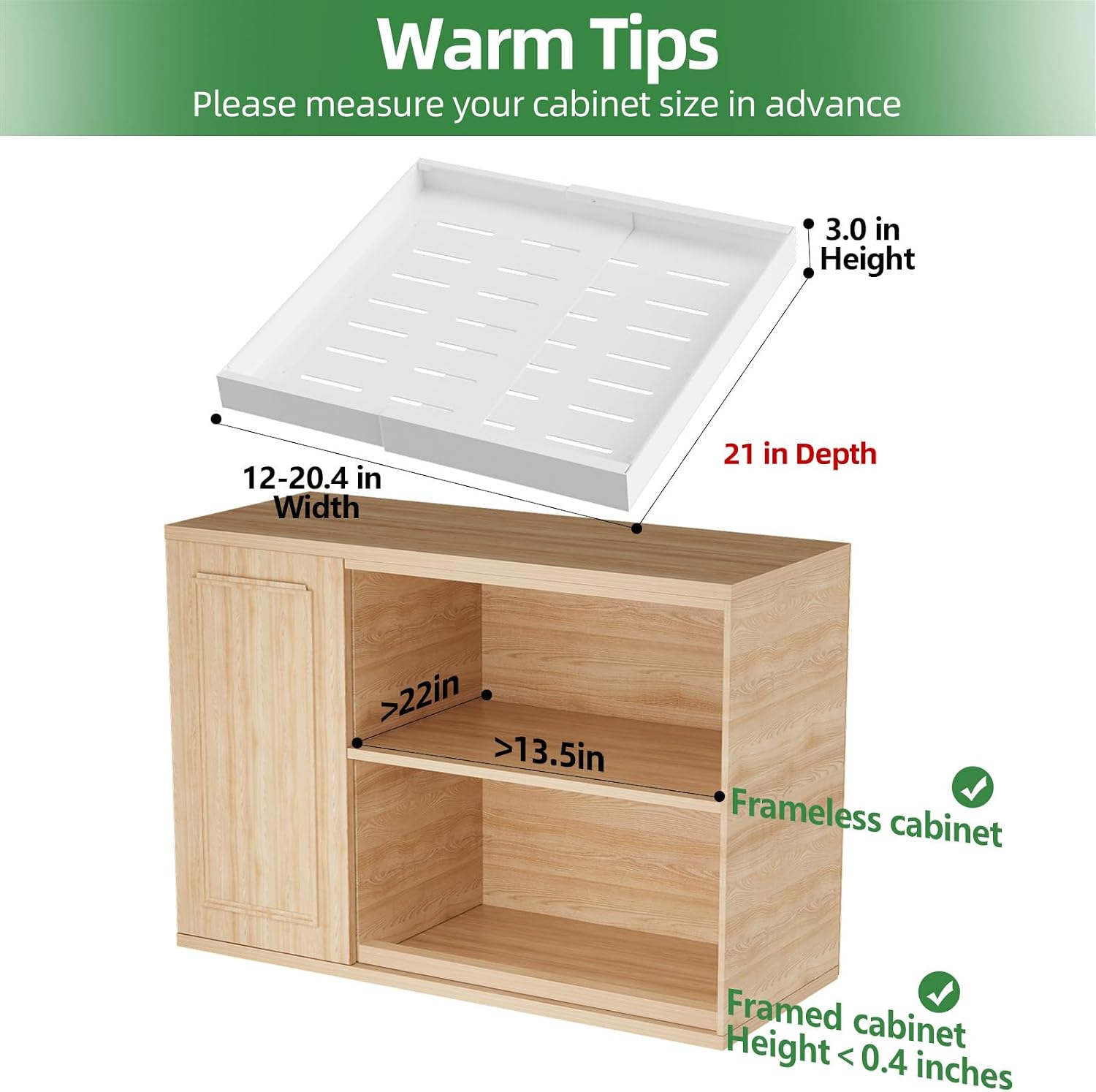
Expandable-width pull-out organizers use a telescoping frame — usually wire or coated steel — that slides out to span a range of interior cabinet widths, typically something like 11 to 19 inches or 17 to 28 inches depending on the model. They mount to the cabinet floor or sides using a combination of small screws and, in many models, adhesive mounting tape as a supplemental anchor. Because they adjust, one SKU can theoretically fit multiple cabinet widths in the same kitchen run.
Fixed roll-out shelves ship at a set width — say, 14 inches, 21 inches, or 30 inches — and mount on full-extension or partial-extension ball-bearing slides that attach to the cabinet’s interior side walls or a dedicated base frame. They tend to feel more “built-in” because they behave exactly like a real cabinet drawer. They’re the type a custom or semi-custom cabinet maker would install from the factory, and aftermarket versions are sold to retrofit existing cabinets.
The decision tree really comes down to three variables: how precisely you know your interior dimensions, what you’re storing (pots and pans vs. cleaning supplies vs. pantry goods), and whether the cabinet has obstructions like a P-trap or garbage disposal.
How the Two Formats Compare: Three Tiers of Use Case
Not every kitchen or budget calls for the same solution. The three sub-sections below walk through distinct use cases — light-duty retrofits, everyday cookware storage, and heavy-load or built-in-quality installations — and identify which format wins at each tier.
Budget-Friendly Retrofit: Expandable Organizers for Pantry and Cleaning Supplies
For homeowners outfitting a rental unit, staging a home for sale, or simply adding organization to a cabinet that stores lighter items — canned goods, cleaning bottles, spice jars — expandable-width pull-out organizers deliver the best value-to-effort ratio. A single product SKU can fit several different cabinet widths, which means you can buy a two-pack and install across non-standard openings without measuring every cabinet to the eighth of an inch before ordering.
Aggregated owner reviews on Houzz (Houzz, pull-out cabinet organizer owner reviews, houzz.com) confirm that this category earns its popularity: “wish I’d done this years ago” appears nearly verbatim across dozens of verified purchaser threads. The enthusiasm is genuine for light-to-medium loads. Weight ratings for most expandable wire organizers fall in the 30–55 lb range — more than adequate for pantry staples and cleaning supplies, but worth noting before you stack cast iron on them.
Installation note: The adhesive-tape anchor included in most expandable kits works reliably on clean, dry, painted or melamine surfaces. Wiping the cabinet floor with isopropyl alcohol before pressing the tape is the step most people skip and most regret skipping. Family Handyman’s coverage of pull-out shelf installations (Family Handyman, “Cabinet Pull-Out Shelves: Everything You Need to Know,” familyhandyman.com) notes that upgrading the included screws is almost always a good call — pick up a handful of #8 × 1¼-inch pan-head screws before you start, since the provided hardware is often sized for thinner cabinet floors than you’ll actually encounter.
Kitstorack
$39.08
In stock on Amazon
Check price on AmazonMid-Range Everyday Cookware: Fixed Roll-Out Shelves with Partial-Extension Slides
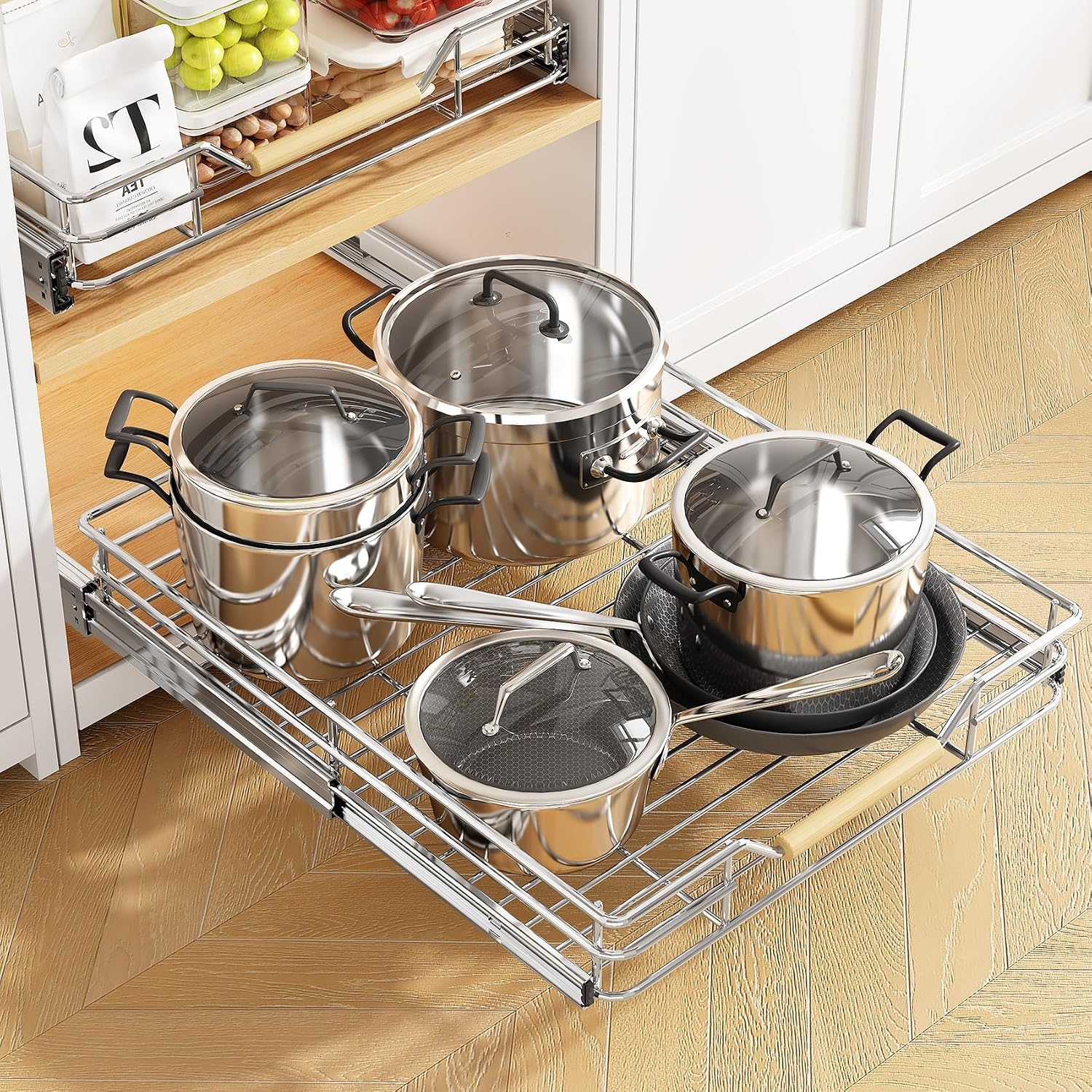
For the cabinet that stores everyday pots, lids, baking sheets, and mixing bowls, a fixed roll-out shelf on partial-extension slides is the right upgrade. Published specs for fixed roll-out shelves from established suppliers typically rate their slides at 75–100 lbs per shelf, which handles a 12-inch cast iron skillet, a dutch oven, and a few stoneware pieces with margin left over. That’s a meaningful step up from the wire expandable format.
A partial-extension slide pulls the shelf out roughly 75% of the cabinet depth, so items at the very back remain partially obscured — acceptable for most everyday cookware scenarios where you know what’s back there and reach in for it regularly. For standard 24-inch base cabinets, partial extension is workable; for anything deeper, see the premium section below.
This Old House’s guide on pull-out shelf installation (This Old House, “How to Install Pull-Out Cabinet Shelves,” thisoldhouse.com) makes clear that the prep work — clearing the cabinet, measuring interior width and depth, confirming slide clearance — typically takes longer than the actual fastening. Budget 20–30 minutes per cabinet for a realistic solo installation including prep, and you won’t be frustrated by the timeline. The “five-minute install” claims you’ll see in some product listings assume the cabinet is already empty and pre-measured.
Fit precision matters here. Unlike expandable organizers, fixed shelves require you to know your interior cabinet width before ordering. Measure the interior width at the floor (not the door opening, which is often narrower) and verify clearance for the slides on both side walls before purchasing.
Pull
$39.97
In stock on Amazon
Check price on AmazonPremium Built-In Quality: Fixed Roll-Out Shelves with Full-Extension Slides
For deep base cabinets — 24 inches is standard; some kitchen islands run 27–30 inches — and for homeowners who want cabinetry that performs like factory-installed hardware, fixed roll-out shelves with full-extension slides are the definitive answer. A full-extension (sometimes called 100% extension) slide brings the shelf completely outside the cabinet face, giving you unobstructed access to everything stored on it, including items at the very back. The cost difference between partial and full-extension hardware is usually $8–$15 per pair at the time of writing; it’s consistently worth paying.
The NKBA’s Kitchen Planning Guidelines and Access Standards (NKBA, “Kitchen Planning Guidelines and Access Standards,” nkba.org) explicitly identify reach depth as a primary barrier in accessible kitchen design. Pull-out shelves on full-extension slides directly address that barrier without requiring a full cabinet replacement — a point that matters not just for universal design projects but for any household where someone has mobility or reach limitations. Reviewers on Houzz document this use case organically: one buyer installed pull-outs specifically for a family member who couldn’t safely reach into deep lower cabinets; another describes them as essential for independent kitchen use following a mobility change.
At this tier, the installation demands more precision — exact interior measurements, proper slide alignment, and screws driven squarely into the cabinet side walls — but the result feels like the cabinet was built that way. If you’re building out a property where cabinet hardware will be evaluated by buyers, or if you simply want the upgrade to last decades without adjustment, this is the format to choose.
PAKETA
$84.99
In stock on Amazon
Check price on AmazonUnder-Sink Cabinets: A Different Problem Entirely
A consistent source of buyer confusion is assuming the pots-and-pans pull-out organizer that works beautifully in one cabinet will work equally well under the sink. It won’t, and it’s worth being direct about why.
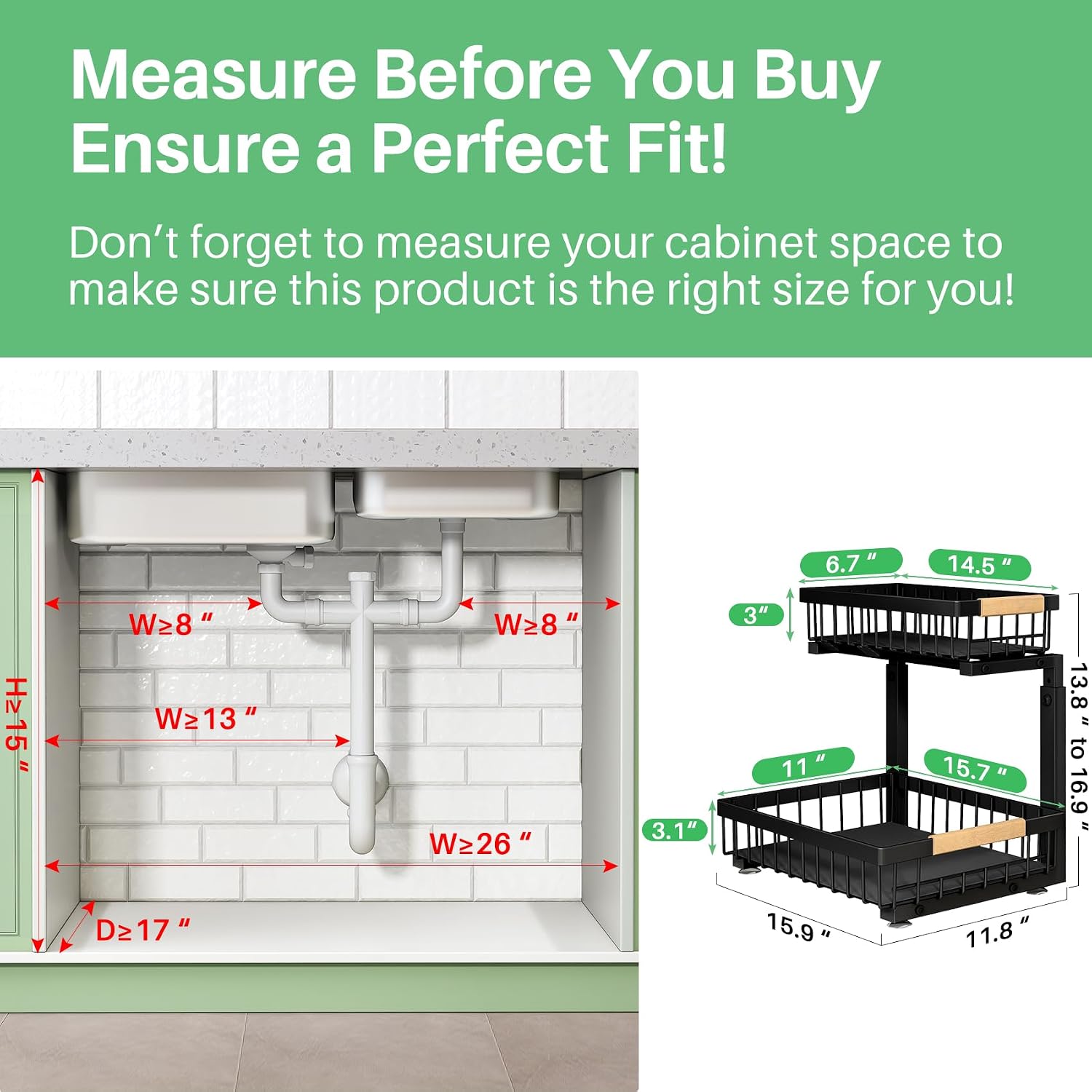
Under-sink cabinets contain plumbing obstructions — a P-trap (the curved drain pipe), supply lines, and potentially a garbage disposal and its wiring — that make standard roll-out shelves impossible to use without modification. A standard organizer’s slides won’t clear the P-trap, and a fixed shelf will collide with supply lines. Apartment Therapy’s roundup of under-sink organizers (Apartment Therapy, “The Best Under-Sink Organizers,” apartmenttherapy.com) identifies this constraint as the primary reason under-sink products are designed as two-tier sliding systems with a center cutout, not full-width shelves. If you’re outfitting an under-sink cabinet, you need a product designed specifically for that geometry. The expandable pots-and-pans organizer is the wrong tool for that job regardless of how strong its reviews are elsewhere.
At a Glance: Spec Comparison
| Factor | Expandable Pull-Out | Fixed Roll-Out Shelf |
|---|---|---|
| Typical weight rating | 30–55 lbs | 75–100 lbs |
| Fit flexibility | ±3–6 inch range | Exact width required |
| Installation hardware | Adhesive + small screws | Screws into cabinet walls |
| Extension type | Usually partial | Partial or full available |
| Avg install time (per cabinet, incl. prep) | 15–25 min | 20–35 min |
| Best use case | Pantry, cleaning supplies, rentals | Cookware, bakeware, deep cabinets |
Frequently Asked Questions
Will an expandable pull-out organizer fit my cabinet if I don’t know the exact interior width? Measure before you buy — but if you’re in a pinch, expandable models tolerate more uncertainty than fixed shelves. Measure the interior width of the cabinet opening at the floor (not the door opening, which is often narrower), and choose a model whose range overlaps your measurement by at least two inches on each side. Tight-limit fits where you’re at the very edge of the advertised range tend to produce the friction-locking drift that reviewers describe.
Is adhesive mounting strong enough, or do I need to drill screws? For lighter loads — spice jars, pantry goods, cleaning supplies — adhesive-only mounting on a properly prepped surface has proven reliable in long-run owner reviews. For heavy cookware, use both adhesive and screws. Always wipe the cabinet floor with isopropyl alcohol before pressing the tape; it’s the most commonly skipped step and the most commonly regretted one.
What is the difference between full-extension and partial-extension slides, and does it matter? Partial-extension slides pull the shelf out about 75% of the cabinet depth. Full-extension slides bring it completely outside the cabinet face. For cabinets shallower than 21 inches, the difference is modest. For standard 24-inch base cabinets — and anything deeper — full extension is the meaningful upgrade. You’ll actually use items stored at the back of the cabinet instead of forgetting they exist.
Can I use a standard pull-out organizer under the sink if I have a garbage disposal? No — at least not without significant modification. A garbage disposal, P-trap, and supply lines occupy the cabinet’s floor and lower clearance, which is exactly where standard roll-out slides mount. Look for an organizer specifically engineered for under-sink use with a built-in cutout for plumbing.
How much weight can these hold with heavy cast iron or stoneware? Fixed roll-out shelves on quality full-extension slides are typically rated at 75–100 lbs — enough for a 12-inch cast iron skillet, a dutch oven, and a few stoneware pieces with margin. Expandable wire organizers spec out lower, usually 30–55 lbs. If your lower cabinets store cast iron or a full set of stoneware, size accordingly and verify the slide rating before buying.
Do I need two people to install these, or is it a solo job? Both formats are solo-installable by most DIYers. The trickiest solo moment is holding the slide in position while driving the first screw. A clamp or a strip of painter’s tape to temporarily hold the slide in place solves this without a second pair of hands. Family Handyman’s pull-out installation coverage (Family Handyman, “Cabinet Pull-Out Shelves: Everything You Need to Know,” familyhandyman.com) recommends marking screw hole positions in pencil before picking up the drill — it makes the sequence significantly easier alone.
The Decision Rule
If you’re outfitting a kitchen where you haven’t measured exact interior widths, you’re working across multiple non-standard cabinets, or you’re primarily storing lighter pantry items and cleaning supplies — expandable pull-out organizers are the right call. Buy two or three in the appropriate width range, prep your cabinet floors properly before mounting, and upgrade the screws.
If you’re storing heavy cookware, you want a true built-in feel, you know your exact interior dimensions, or you’re building out a property where cabinet hardware will be evaluated by buyers — fixed roll-out shelves with full-extension slides are worth the extra precision. The install takes more planning, but the result feels like the cabinet was built that way.
Either way: once you install the first one, you’ll immediately start counting how many other cabinets need the same treatment. “Wish I’d done this years ago” is the honest consensus of nearly every reviewer across both product types — and that, more than any spec comparison, tells you what you need to know about the upgrade.