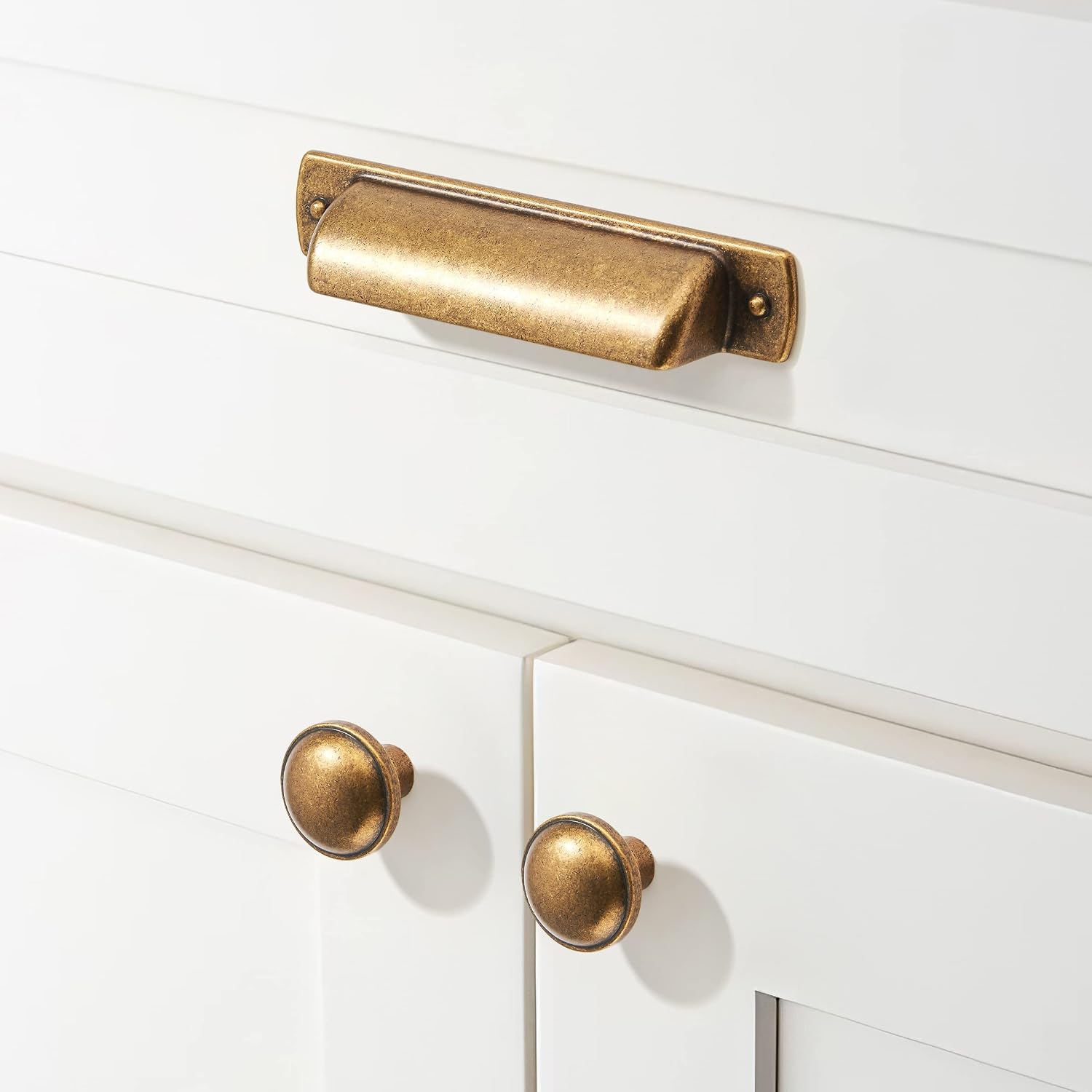
If you’ve ever stared at a wall of cabinet hardware samples and felt like the differences between “antique brass,” “champagne bronze,” and “oil-rubbed bronze” were basically invisible — you are not alone, and this guide is for you. Cabinet hardware is the jewelry of a kitchen: a small purchase by square-foot standards, but one with an outsized effect on whether a room feels pulled-together or just okay. Warm-metal finishes — a family that spans from soft golds to deep, almost-black bronzes — have staged a sustained comeback in traditional and transitional kitchens. Done right, they read as timeless rather than trendy. Done wrong, they read as the 1980s calling. The difference almost always comes down to finish selection, construction quality, and coordination — not price. This guide breaks down exactly how to navigate those decisions, with the math to back it up.
| EDITOR'S PICKkhtumeware 10 Pack 3" Drawer Pu… | Mid-tierKOOFIZO 10 Pack 3 Inch Oil Rubb… | Budget pick[Goo-Ki 5 Inch Hole Center Antiq…](https://www.amazon.com/dp/B0G2PY9M88?tag=greenflower20-20) | |
|---|---|---|---|
| Hole Center | 3" | 3" | 5" |
| Finish | Antique Brass | Oil Rubbed Bronze | Antique Brass |
| Quantity | 10 | 10 | 6 |
| Material | — | — | Zinc Alloy |
| Brand | khtumeware | KOOFIZO | Goo-Ki |
| Price | $20.79 | $18.88 | $14.06 |
| See on Amazon → | See on Amazon → | See on Amazon → |
What “Warm Metal” Actually Means: Finish Families Decoded
The warm-metal category covers a spectrum, and the names are not standardized across manufacturers — which is the source of most buyer confusion. Here’s how the three most common finishes actually differ visually and practically.
Antique brass is a yellow-gold base that has been intentionally aged or patinated to mute its brightness. The result sits between raw brass (which reads shiny and contemporary) and a dark bronze. Buyers consistently describe well-executed antique brass as “gold without being bright and brassy” — language that keeps appearing in aggregated owner reviews on Houzz and across retail review sections. The khtumeware antique brass cup pulls have generated exactly that phrasing repeatedly, with owners also using the word “timeless.” That word matters: it’s the opposite of the fear most buyers bring into this finish category.
Champagne bronze is a lighter, warmer, slightly pinkish gold. It sits closer to a modern brushed gold than to a traditional antique brass. The practical difference is that champagne bronze tends to coordinate more naturally with contemporary plumbing fixtures — which we’ll address in the FAQ below — while antique brass leans more traditional and pairs best with unlacquered or oil-rubbed brass faucets.
Oil-rubbed bronze is the darkest finish in the family. It’s a bronze base that has been chemically treated to create a very dark brown-to-black surface, often with subtle highlights at high-contact areas where the finish “wears” naturally over time. This finish photographs well on white and cream cabinetry and tends to read as more masculine or rustic than antique brass. The Koofizo oil-rubbed bronze pulls have been frequently called out in owner reviews for a specific construction detail: solid (closed-back) construction, which creates a noticeably heavier, more premium feel in hand compared to hollow alternatives at similar price points.
Brushed gold / warm gold (sometimes sold as “satin brass” or “unlacquered brass”) sits between raw brass and antique brass. The Haliwu brushed gold T-bar knob has generated consistent owner language worth noting: reviewers repeatedly use the phrase “makes my cabinets look more expensive.” That’s a value signal, not marketing copy — it reflects that the finish hits a visual sweetspot between budget and luxury without requiring either.
Construction Quality: The One Spec That Actually Separates Good Hardware from Bad
Finish is visible. Construction is felt. And in the warm-metal category specifically, construction quality is where cheap hardware announces itself.
Solid back vs. hollow back on pulls is the single most important construction distinction to understand. A hollow-back pull is a tube or channel welded or formed into a U-shape — functional, but it flexes noticeably on heavier drawer applications and produces a hollow sound on contact. A solid-back pull has a filled or solid bar — heavier, more rigid, and more satisfying in daily use. Koofizo’s oil-rubbed bronze pulls are specifically called out for solid construction by owners who have handled hollow alternatives at the same price, and the reviews treat this as a meaningful upgrade rather than a minor detail.
Screw post length and hardware thickness matter for cabinetry with overlay or inset door construction. This Old House’s hardware selection guidance notes that most standard pulls ship with screws sized for ½-inch door thickness — if you’re working with thicker doors (common in semi-custom and custom lines), you’ll need longer posts. Confirm this before ordering in quantity.
Weight as a proxy for quality is imperfect but useful. Aggregated owner reviews across Houzz and retail platforms consistently report that heavier hardware feels more expensive — and that reviews noting “surprisingly heavy for the price” tend to correlate with higher long-term satisfaction.
The Coordination Problem: Matching Hardware to Fixtures and Finishes
Here’s where most buyers get tripped up: warm-metal finishes don’t all speak the same language to each other. Architectural Digest’s editorial coverage of kitchen hardware trends notes that mixing warm metals can work beautifully — but only when the tones are close enough to read as intentional rather than mismatched.
Hardware-to-faucet coordination is the highest-stakes pairing. If you have a champagne bronze faucet from Delta or Moen, you want hardware that sits in the same warm-but-not-yellow register. True antique brass often reads too yellow next to champagne bronze fixtures. Brushed gold is usually a better bridge. If your faucet is oil-rubbed bronze, your hardware should match closely — oil-rubbed bronze is dark enough that contrasting warm metals will create visual noise rather than intentional layering.
Apartment Therapy’s hardware buying guidance recommends the two-metal maximum rule for most kitchens: pick a dominant warm metal for hardware and a secondary accent (sometimes the faucet, sometimes light fixtures), and stop there. A third warm-metal tone almost always reads as a mistake.
Hardware-to-cabinet-finish coordination follows a shorter set of rules:
- White and cream cabinetry: all three finish families work. Antique brass and champagne bronze tend to read as elevated; oil-rubbed bronze reads as rustic or transitional.
- Warm wood tones (natural oak, walnut, honey maple): antique brass and champagne bronze can compete with the wood’s warmth; oil-rubbed bronze often creates better contrast.
- Green, navy, and charcoal painted cabinets: all three finish families are strong, but oil-rubbed bronze and antique brass are the most historically grounded pairings with saturated colors.
The Hole-Spacing Trick That Saves You from Extra Drilling
One of the most practical notes to come out of owner reviews in this category: the Amerdeco oil-rubbed bronze arch pull features an extended side design — the decorative arch on each end of the pull extends beyond the hole centers. Multiple owners report that this made the pull visually read as longer than its actual center-to-center measurement, which in at least one documented case allowed a buyer to swap from a different pull style without drilling new holes. If you’re replacing existing hardware and want to avoid patching and refinishing, extended-side or arched designs can be a real solution — not just an aesthetic preference.
By the Numbers: Hardware Quantity for a Full Kitchen
| Kitchen element | Typical count | Hardware type |
|---|---|---|
| Upper wall cabinets (doors) | 8–14 doors | 1 knob or pull per door |
| Lower base cabinets (doors) | 4–8 doors | 1 pull per door |
| Drawer bank (per drawer) | 4–8 drawers | 1 pull per drawer |
| Pantry/tall cabinets | 1–2 doors | 1–2 pulls per door |
Quick formula: For a standard 10×10 kitchen (the industry benchmark used by NKBA planning guidelines), expect 18–28 individual hardware pieces total, with the exact count depending on door-to-drawer ratio. Hardware typically ships in 10-packs or 25-packs for pulls and 10-packs for knobs — plan for one overage pack to cover any damaged pieces or future replacements.
Full-Home Hardware Strategy: Beyond the Kitchen
A consistent pattern in owner reviews across warm-metal hardware is that buyers don’t stop at the kitchen. Multiple reviewers across antique brass, oil-rubbed bronze, and brushed gold listings specifically note they applied the same hardware to bedroom dressers, closet built-ins, and bathroom vanities. This is worth building into your specification from the start: if you’re committing to a warm-metal finish family for a kitchen project, buying extra packs to carry the finish through adjacent spaces is both cheaper (same order, no restock) and more cohesive from a resale standpoint. Architectural Digest’s coverage of whole-home hardware coordination treats this as a current design priority rather than an afterthought.
Frequently Asked Questions
What is the actual visual difference between antique brass, champagne bronze, and oil-rubbed bronze finishes?
Antique brass is a muted yellow-gold with intentional aging — the “gold that doesn’t look cheap” finish. Champagne bronze is lighter, slightly pinkish, and closer to a contemporary brushed gold. Oil-rubbed bronze is very dark brown-to-black with subtle warm highlights. Think of it as a spectrum from warmest-light to warmest-dark, with champagne bronze at the lighter end, antique brass in the middle, and oil-rubbed bronze at the deepest.
Will champagne bronze cabinet hardware match my champagne gold Delta or Moen plumbing fixtures?
Usually yes, but verify tone before ordering in quantity. “Champagne bronze” as a hardware finish name and “champagne bronze” as a Delta or Moen finish name are not guaranteed to be identical across manufacturers. Order one sample pull, hold it next to your faucet in your kitchen’s actual lighting, and confirm the tones sit in the same family. Apartment Therapy’s hardware guidance specifically flags this cross-manufacturer naming inconsistency as one of the most common sources of buyer disappointment.
How do I avoid gold cabinet hardware looking cheap or outdated?
Three levers: (1) Choose a muted or aged finish — antique brass rather than polished brass, brushed gold rather than shiny gold. (2) Prioritize solid construction and weight; hollow hardware announces itself. (3) Match the hardware scale to the cabinet door size — oversized pulls on small doors and undersized knobs on large drawer fronts both read as off. Consistently, the owner reviews that use words like “timeless” and “elevated” come from buyers who chose muted finishes and appropriately sized hardware.
Is solid-back construction on cabinet pulls worth paying more for compared to hollow-back options?
For drawer pulls, yes — almost always. Drawers take repeated pulling force and daily contact, and hollow pulls flex and sound cheap over time. For door knobs and small door pulls, the difference is less critical because the force applied is lower. The Koofizo oil-rubbed bronze pull’s solid construction is called out specifically by owners who have compared both, and the consensus is that it justifies the price step.
How do I calculate how many packs of hardware I need for a full kitchen with both doors and drawers?
Count every door and every drawer front that needs hardware. A typical 10×10 kitchen runs 18–28 pieces. Divide by pack size (usually 10 or 25), and round up to the next whole pack — always buy at least one extra pack for breakage and future replacements. Hardware that’s discontinued even six months after your project can be impossible to match exactly, so overage inventory is cheap insurance.
The decision rule: If your project is a traditional or transitional kitchen with white, cream, or warm-painted cabinetry and you want hardware that photographs well, ages gracefully, and gives owners that “looks more expensive” response — antique brass or champagne bronze is your finish. If you’re working with saturated colors or natural wood and want grounding contrast, oil-rubbed bronze with solid construction is the spec to prioritize. Either way, coordinate to your plumbing fixtures first, confirm the tone in your actual kitchen light before bulk-ordering, and carry the finish through adjacent rooms if you want a renovation that reads as a whole-home decision rather than a kitchen-only project.