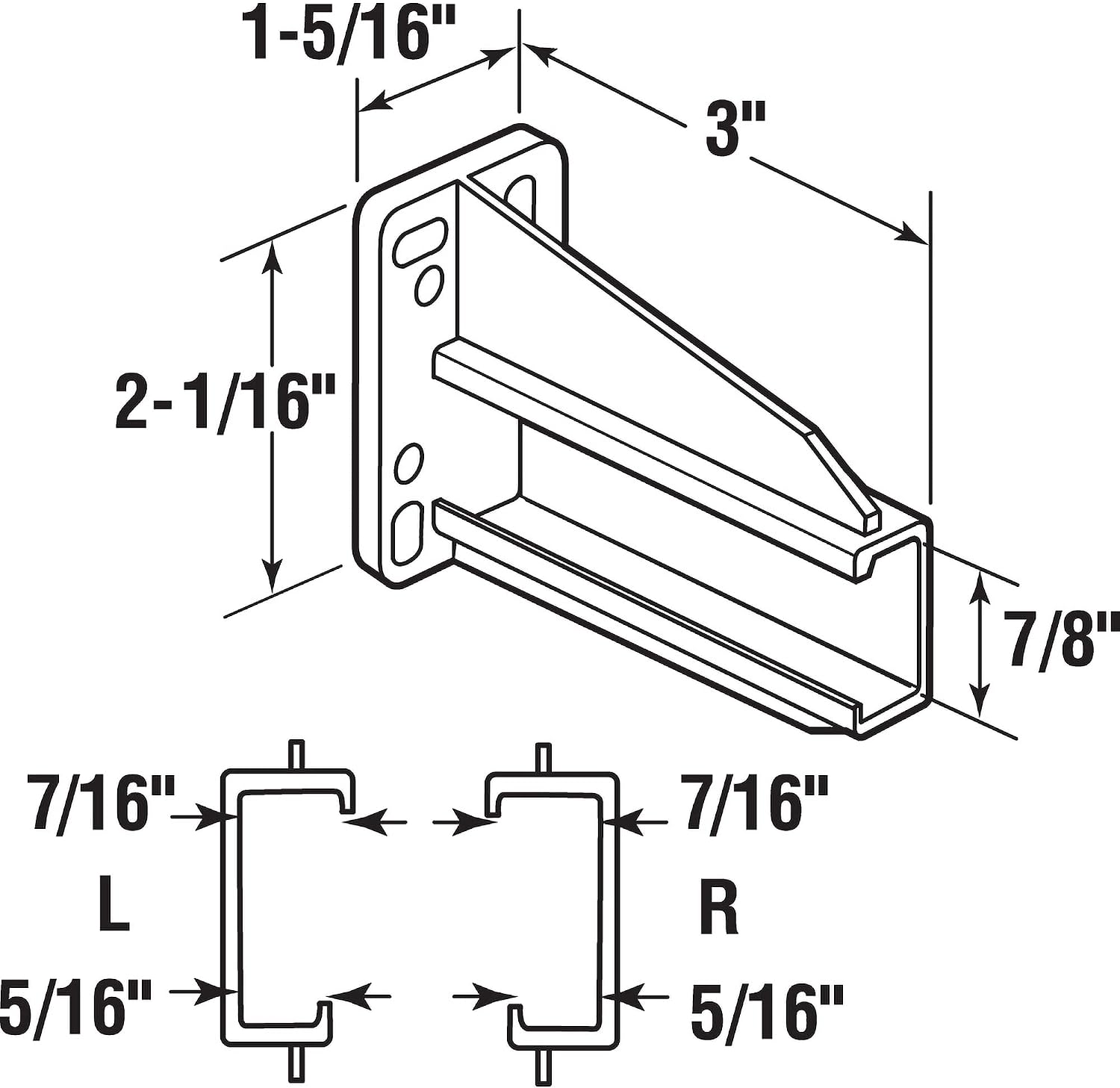
If you’ve ever yanked open a kitchen drawer and felt that grinding wobble — the one where the drawer tilts, catches, or just gives up halfway — you already know the frustration. Drawer slides are the metal (or sometimes plastic) tracks that mount inside your cabinet and let the drawer box glide in and out smoothly. When they wear out, bend, or simply hit the end of their lifespan, the fix is usually pretty affordable: a new pair of slides and about an hour of your time. The catch is that there are dozens of slide types, sizes, and weight ratings, and buying the wrong ones means a wasted trip back to the store. This guide is built around one goal — helping you measure and spec replacement slides accurately the first time, whether you’re fixing a single sticky drawer in a rental unit or sourcing hardware across a ten-cabinet bathroom refresh.
Why Drawer Slides Fail (and What You’re Actually Replacing)
Before you start measuring, it helps to understand what you’re looking at. Most residential cabinets use one of three slide configurations:
Side-mount slides are the most common type in North American stock and semi-custom cabinetry. They attach to the left and right interior walls of the cabinet box, with a matching rail that fastens to the drawer box itself. If you open your kitchen drawers right now and look inside the cabinet, you’ll almost certainly see a pair of metal tracks running front to back along each wall — those are side-mount slides. They come in both ball-bearing (smooth, quiet, long-lasting) and friction/roller versions (the older nylon-roller style that’s more likely to be causing your problem).
Undermount slides hide entirely beneath the drawer box and connect at the back of the cabinet. They’re the hardware behind that “floating drawer” look where you can’t see any metal from the front. Blum’s TANDEM line and Häfele’s undermount systems are the category benchmarks here. Owners in long-run Houzz reviews consistently describe undermount slides as meaningfully quieter and more stable than side-mounts — but they’re also harder to retrofit because the drawer box needs a routed channel underneath to accept the mounting clip.
Center-mount slides are a single track running down the middle of the cabinet floor. You’ll mostly find them in older construction (pre-1990s) or budget furniture. They’re inexpensive and easy to replace in kind, but they offer less weight capacity and no soft-close option.
The most common failure modes, per the Family Handyman drawer slide replacement guide, are: bent or corroded steel on the cabinet-side member, worn-out ball bearings that allow lateral wobble, and broken disconnect clips that prevent the drawer from fully re-engaging. Soft-close dampeners — the small mechanism that slows the drawer in the last inch of travel — also wear out on their own and can sometimes be replaced without changing the whole slide.
The Five Measurements That Actually Matter
This is where most DIYers go wrong. They measure one thing (usually the slide length) and guess at the rest. Here’s the complete checklist.
1. Slide length Measure the interior depth of the cabinet from the front face frame (or front edge of the frameless cabinet box) to the back wall. Subtract 1 inch. That’s your slide length. Standard sizes run in 2-inch increments: 10”, 12”, 14”, 16”, 18”, 20”, 22”, and 24”. A 23-inch interior depth means you want 22-inch slides, not 24-inch. Per the This Old House drawer systems guide, buying slides that are too long is one of the most common retrofit errors — the slide hits the back wall before the drawer is flush with the front.
2. Drawer box width Measure the actual width of the drawer box itself (the wooden or plywood box, not the face of the drawer front). For side-mount slides, the standard clearance is 1/2 inch per side — meaning the cabinet opening must be exactly 1 inch wider than the drawer box. If your drawer box is 14 inches wide, the inside opening of the cabinet should be 15 inches. If that math doesn’t work out when you measure your cabinet, you’ve either got a non-standard slide configuration or the drawer box was shimmed at some point.
3. Weight rating This is the number most people ignore and then regret. Slides are rated by the load they can carry (the drawer box plus its contents). Standard residential ball-bearing slides are rated at 75–100 lbs. A heavy-duty pantry drawer loaded with cast iron can easily exceed that. Blum’s TANDEM plus BLUMOTION technical documentation rates their standard undermount slides at 110 lbs and their heavy-duty variant at 170 lbs. Check your application honestly: a bathroom vanity drawer rarely needs more than 75 lbs; a base cabinet that holds pots and pans probably does.
4. Drawer height and mounting position For side-mount slides, the slide mounts at the midpoint of the drawer box height. Measure from the bottom of the drawer box to the center of the drawer — that’s where the slide’s mounting holes need to land. Most slide manufacturers publish a “drawer height range” in their spec sheets; verify your drawer falls within it before ordering.
5. Extension type Slides come in three extension styles:
- 3/4 extension: The drawer opens to roughly 75% of its depth. Common in older cabinetry.
- Full extension: The drawer opens completely, giving you access to the full interior. The current standard in new construction.
- Over-travel / full-access: The drawer extends slightly beyond the cabinet face, useful for pull-out trash or deep base drawers. Less common but available in most commercial slide lines.
Match what you have unless you’re intentionally upgrading. Switching from 3/4 to full extension is a worthwhile upgrade, but it requires verifying that nothing behind the cabinet (pipes, wall framing) blocks the extended travel.
By the Numbers: Quick Spec Reference
| Application | Recommended slide type | Weight rating to spec | Typical slide length |
|---|---|---|---|
| Standard upper drawer (dishes, utensils) | Side-mount, full extension, ball-bearing | 75–100 lbs | 18”–22” |
| Base cabinet pot/pan drawer | Side-mount or undermount, heavy-duty | 100–150 lbs | 20”–24” |
| Bathroom vanity drawer | Undermount or side-mount | 50–75 lbs | 12”–18” |
| Pull-out pantry / trash | Over-travel, heavy-duty | 100–170 lbs | 20”–24” |
Matching the New Slide to Your Cabinet Box Construction
Here’s something the basic measurement guides skip: the cabinet box material affects how well a replacement slide will hold over time, and it should influence which mounting hardware you select.
Plywood boxes (typically 1/2” or 3/4” birch or maple ply) hold screws reliably and can support repeated removal and reinstallation without stripping. If you’re working with plywood-box cabinetry — common in mid-range RTA brands and most semi-custom lines — you have maximum flexibility on slide selection. Full-extension ball-bearing slides with standard wood screws are a clean, durable solution.
Furniture board / MDF boxes (the material in most entry-level stock cabinetry) are more screw-sensitive. The surface holds adequately for initial installation, but if you’re replacing slides that have already been removed once or twice, the original screw holes may be worn. Per the Häfele hardware catalog, using wider-flange mounting plates or a drop of two-part epoxy around the original screw hole before reinstalling significantly extends the life of the connection in MDF.
Frameless vs. face-frame cabinets also matters for slide selection. Face-frame cabinets have a wooden border across the front of the cabinet opening; the slide must account for the depth of that frame when calculating usable interior depth. Most side-mount slides marketed for face-frame installation include a front bracket that bridges this offset. Frameless (European-style) cabinets have no front frame, so the slide mounts directly to the cabinet wall and the drawer opening is the full interior dimension — simpler math, more slide options.
Kitchen & Bath Business’s 2024 owner satisfaction survey noted that homeowners who upgraded from roller-style slides to full-extension ball-bearing slides during a kitchen refresh rated drawer satisfaction significantly higher at the one-year mark than those who replaced like-for-like — worth flagging if you’re already doing the work.
Soft-Close: When It’s Worth Upgrading Mid-Project
If the original slides were basic ball-bearing without soft-close and you’re already pulling drawers for a repair, this is a natural inflection point to evaluate the upgrade. Soft-close mechanisms (either integrated into the slide or available as add-on dampeners) add $5–$20 per pair to the hardware cost depending on brand and format.
The math is straightforward: a 10-drawer kitchen at $15 per pair in soft-close upgrade cost adds $150 to a project that’s already budgeted for hardware and labor. Across aggregated Houzz owner threads, the most consistent regret from mid-range kitchen renovations is skipping soft-close when the opportunity was present. It’s not a luxury item at this point — it’s the expectation of anyone who will tour or purchase the property.
Blum’s BLUMOTION dampener can be retrofitted to some existing TANDEM slides as a clip-on add-on (per Blum’s product documentation), which means you don’t necessarily need to replace the entire slide to get the functionality — just verify compatibility with your specific slide model before ordering.
The Decision Rule
Here’s the if/then framework for matching your situation to your sourcing decision:
If you have a face-frame cabinet with a plywood box and a standard 22”–24” depth, then a full-extension, ball-bearing side-mount slide in the 100-lb weight class is your default. Add soft-close if the drawer is visible from the main living area or if the property is going to market within 18 months.
If the cabinet box is MDF or furniture board with worn screw holes, then plan for wider-flange mounting hardware or an epoxy fill on stripped holes before you install — otherwise the new slides will feel loose within six months.
If you’re replacing slides on a drawer that carries significant weight (pots, canned goods, a pull-out trash system), then don’t spec to the minimum. Go to the next weight tier. The $8 difference between a 75-lb and a 100-lb rated slide is not where you want to economize.
If the cabinet uses undermount slides and you’re retrofitting, then confirm the drawer box has the required bottom channel before ordering — most undermount systems are not compatible with a standard flat-bottomed drawer box without modification.
If you’re sourcing across multiple units (rental property, flip, contractor job), then standardize on a single slide length and brand across the project. Mixed hardware sources mean mixed screw patterns and inconsistent drawer behavior that shows up in buyer walkthroughs.
Get the five measurements written down before you open a browser or walk into a store. Everything else — brand, finish, soft-close add-on — is a secondary decision. The measurement is the one that determines whether you’re making one trip or two.