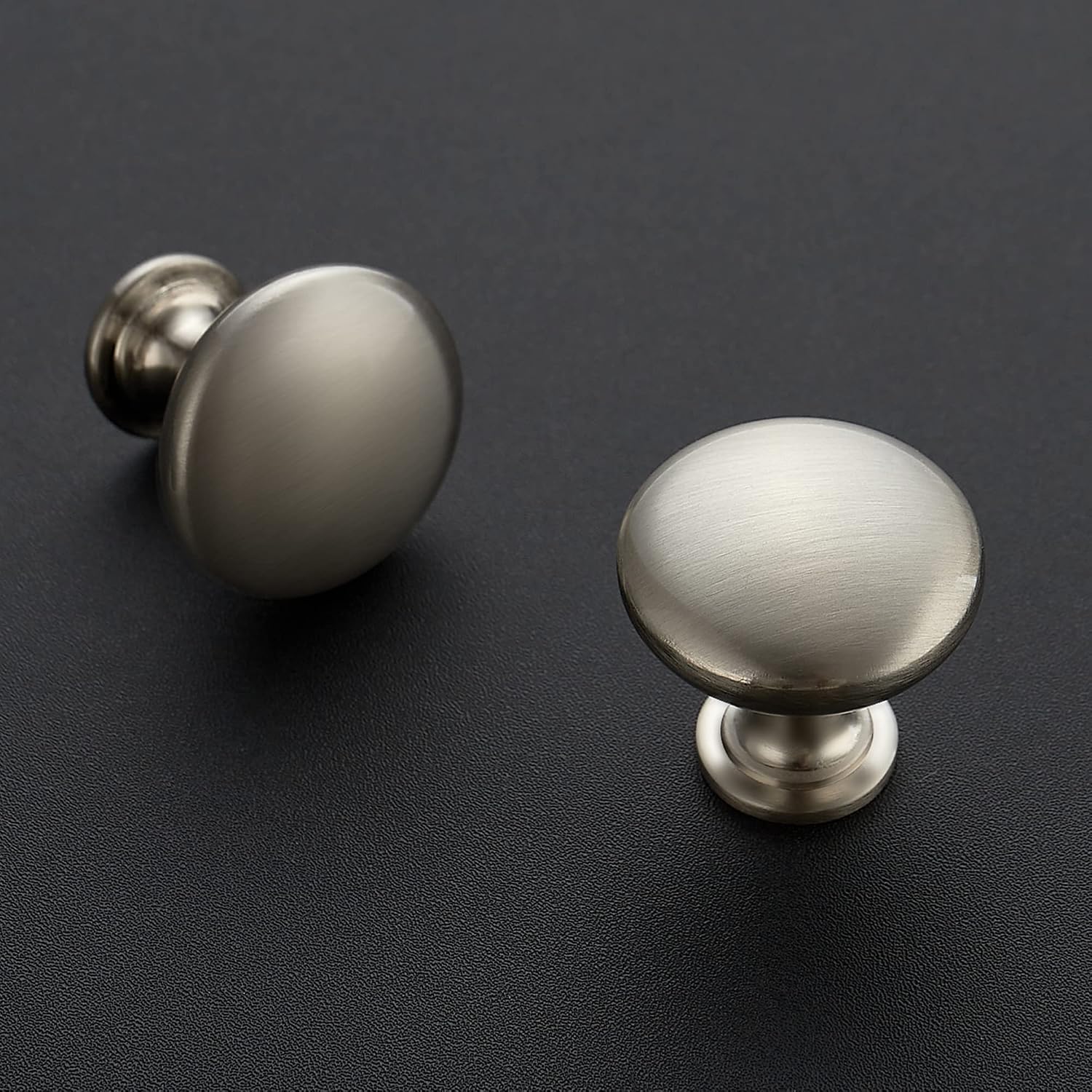
If you’ve ever stood in a hardware aisle holding a drawer pull in one hand and a cabinet knob in the other, wondering which one is actually right for your kitchen, you’re in good company. A knob is a single-point grip — a small, round (or square, or faceted) piece of hardware attached to a door or drawer with one screw. A pull (sometimes called a bar pull or handle) spans a longer distance and mounts with two screws, giving you a horizontal or vertical bar to grab. Both do the same fundamental job — open your cabinets — but they make different promises in terms of ergonomics, installation effort, cost per door, and the visual weight they add to your kitchen. This guide walks you through every tradeoff so you can lock in a spec before your hardware order goes out.
Why the Knob vs. Pull Decision Matters More Than It Looks
Here’s the math most people don’t run until it’s too late: on a standard 10×10 kitchen, you’re looking at roughly 30–40 cabinet doors and drawers. Multiply that by your hardware cost per piece, and a $4-per-unit difference between a basic knob and a mid-grade bar pull becomes $120–$160 in additional spend before you’ve upgraded a single finish. Scale that to a full 10×12 kitchen renovation with upper cabinets, lower cabinets, a pantry, and a kitchen island, and you could be making a $300–$600 decision without realizing it.
Beyond budget, this decision touches ergonomics, installation time, and resale perception. Architectural Digest’s 2025 cabinet hardware trend coverage confirms that flat-front cabinetry — Shaker and slab styles dominating the mid-range RTA and semi-custom market right now — heavily favors pulls for visual proportion. Knobs read as traditional; pulls read as transitional-to-modern. If you’re flipping a property in a neighborhood where buyers expect current design language, that visual signal carries real weight.
The Ergonomic and Functional Case: Which One Is Actually Easier to Use?
Let’s talk about how these things feel in daily use, based on what owners report after living with their kitchens.
Knobs on doors, pulls on drawers has been the classic rule-of-thumb for decades, and it still holds up in most kitchens — but the reasoning matters. Drawers require a pulling motion that benefits from two-handed grip points; a single knob centered on a heavy pot drawer forces your wrist into an awkward torque. Owner discussions aggregated by Houzz consistently flag wrist fatigue on oversized lower drawers when knobs are used, especially in households where the drawers carry cast iron or heavy small appliances. Pulls distribute the force across your palm and multiple fingers, which is why kitchen designers tend to spec them on any drawer wider than 18 inches.
Doors are different. A door swings on a hinge, so the gripping motion is more of a pinch-and-pull than a straight tug. A knob handles that motion comfortably. That said, owners with young children or limited hand strength — a detail worth flagging if you’re staging for a broad buyer pool — report that cup pulls and bar pulls are easier to operate consistently, especially on upper cabinet doors where you’re reaching overhead.
The mixing strategy most designers actually use: Bar pulls on all drawers (especially the lower bank), knobs on upper cabinet doors, and pulls on lower cabinet doors when those doors are 30 inches or taller. This layered approach appears repeatedly in project write-ups on Apartment Therapy and in NKBA-affiliated designer commentary. It costs a bit more in hardware variety but solves the ergonomic problems without sacrificing the visual rhythm of the kitchen.
Installation Specs: Time, Template Accuracy, and Hidden Labor Cost
This is where the decision gets concrete for contractors and remodelers pricing hardware installation into a bid.
Knobs: one hole, one screw, done. A knob installs in roughly 3–5 minutes per door once your drill template is set. Family Handyman’s Cabinet Hardware Installation Guide notes that a basic cardboard or metal jig locks in your placement quickly, and single-hole drilling has minimal margin for error — if you’re off by 1/8 inch, only one hole shows the mistake.
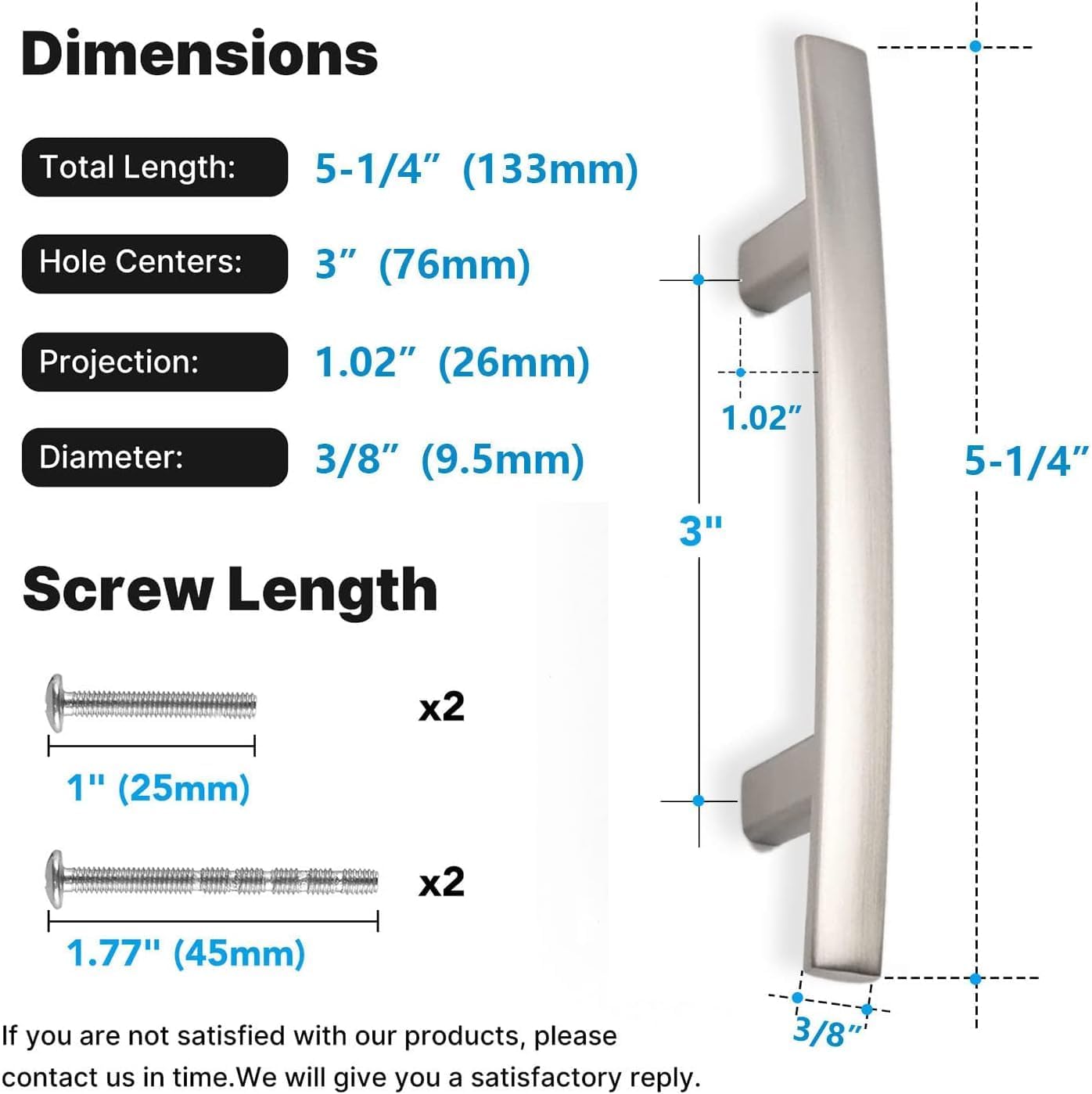
Pulls: two holes, alignment-critical. The center-to-center (CTC) measurement — the distance between the two mounting holes — must be consistent across every single door and drawer in the kitchen. Common CTC measurements are 3 inches, 3-3/4 inches, 5 inches, and 6-1/4 inches. If you order pulls before confirming your template, or if your template drifts even slightly across 35 doors, you get visible misalignment. This Old House’s hardware installation guidance specifically flags the importance of a dedicated drill jig for two-hole pulls, which adds roughly $15–$40 in tooling cost per job and 20–30% more installation time per unit compared to knobs.
By the numbers — installation time comparison (estimated, standard 10×10 kitchen, 35 pieces):
| Hardware Type | Avg. Time Per Piece | Total Install Time (35 pcs) |
|---|---|---|
| Knobs (single hole) | 4 minutes | ~2.3 hours |
| Pulls (two-hole, jig-set) | 6 minutes | ~3.5 hours |
| Mixed (knobs + pulls) | 5 minutes avg. | ~2.9 hours |
For a contractor billing at $65–$85/hour, that’s a $78–$119 labor difference between an all-knob and an all-pull kitchen — not enormous, but worth building into your estimate so there are no surprises.
Cost, Finish, and Tier-by-Tier Breakdown
Hardware pricing in 2025–2026 spans an enormous range, and the finish choice often drives cost more than the knob-vs.-pull decision itself. Here is how the three main budget tiers stack up in real terms.
Budget Tier: Entry-Level Zinc Alloy Hardware
Entry-level zinc alloy knobs and pulls in brushed nickel or matte black typically run $2–$6 per piece. These are what you’ll find on stock-level builds from big-box cabinet lines. They function fine and photograph well, but owner reviews aggregated on Houzz consistently report finish wear within 18–24 months of daily use, particularly at the contact point where fingers grab. If your project is a rental unit, a quick flip, or a secondary bathroom, this tier gets the job done without over-investing.
Project cost scenario — 10×10 kitchen, 35 pieces, entry-level knobs: $70–$210
 product image](/images/external/080ca0e45852.jpg)
Ravinte
$8.99
In stock on Amazon
Check price on AmazonMid-Range Tier: Solid Brass or Steel with PVD Finish
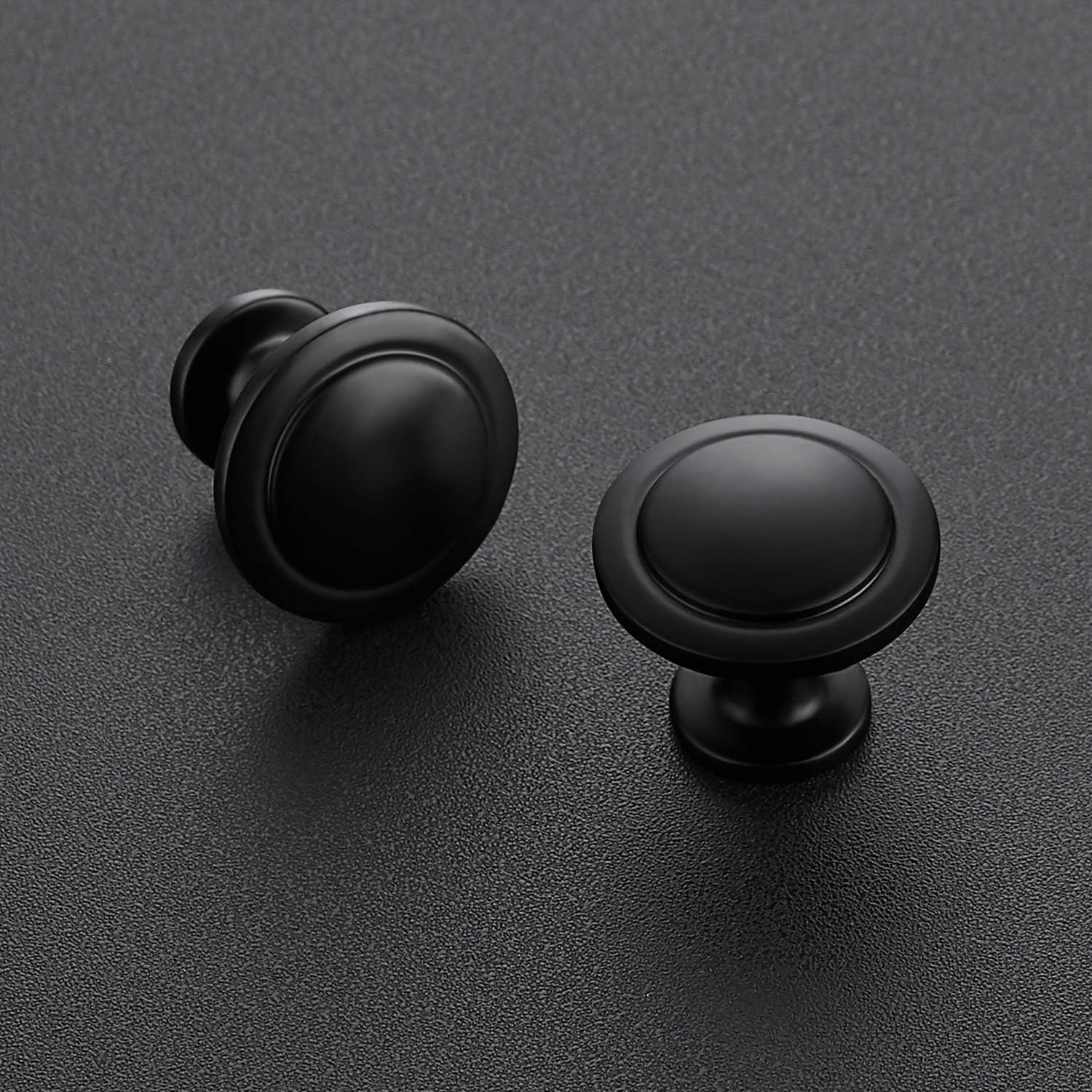
Solid brass or steel construction with PVD (Physical Vapor Deposition) finish coating typically runs $8–$22 per piece. This is where most RTA specialist buyers land. PVD-coated hardware resists tarnishing and corrosion significantly better than standard lacquered plating, which matters if you’re investing in a semi-custom build you plan to hold for 10 or more years. Apartment Therapy’s designer commentary calls this the “invisible upgrade” — the hardware looks similar to entry-level at a glance but holds its finish through years of daily contact. For the classic mixed strategy (knobs on upper doors, pulls on drawers and lower doors), expect to spend between $400 and $700 on hardware for a typical 10×10 kitchen at this tier.
Project cost scenario — 10×10 kitchen, 35 pieces, mid-range pulls (mixed CTC): $280–$770
Ravinte
$24.21
In stock on Amazon
Check price on AmazonPremium Tier: Solid Forged Brass and Artisan Finishes
Solid forged brass, hand-finished, or artisan hardware from specialty vendors runs $25–$80 or more per piece. At this tier, the hardware is a deliberate design statement. Architectural Digest’s 2025 cabinet hardware trend coverage specifically identifies unlacquered brass and aged bronze as dominant finishes in designer-adjacent kitchens. If your project uses semi-custom or designer cabinetry, the hardware finish needs to keep pace with the cabinet quality or the entire investment reads as inconsistent. Plan for a hardware budget of $1,125–$3,600 on a 10×12 kitchen at 45 pieces, depending on the vendor and specific finish selected.
Project cost scenario — 10×12 kitchen, 45 pieces, premium pulls: $1,125–$3,600
homdiy
$32.29
In stock on Amazon
Check price on AmazonStyle and Resale: Reading the Room
The style conversation is one where owner reviews and designer guidance converge clearly.
Knobs favor traditional, transitional, and cottage aesthetics. If your cabinet style is raised-panel, beadboard, or decorative-door inset, a round or bin-pull knob looks proportionally correct. Houzz project discussions from 2023–2025 show knobs appearing most often in Shaker kitchens where the homeowner wanted to soften what could otherwise read as stark or minimal.
Pulls favor flat-front, Shaker, and contemporary aesthetics. Bar pulls — especially long, slim ones in the 128mm to 160mm CTC range — are almost universally recommended on slab-door cabinetry. The horizontal line of the pull reinforces the clean geometry of the door. Apartment Therapy’s designer commentary consistently notes that long pulls on lower cabinets and drawers make kitchens photograph wider and more open, which is a meaningful consideration if listing photos matter to your outcome.
For resale specifically: The National Kitchen and Bath Association’s 2025 Market Index indicates that matte black and brushed gold finishes are currently perceived as more current by buyers in the $400,000–$700,000 home price segment, while chrome and brushed nickel remain safer bets in price-sensitive markets where broad buyer appeal matters more than trend alignment. If you’re flipping, default to matte black bar pulls — they’re inexpensive at mid-grade, photograph well, and read as deliberately chosen rather than builder-grade.
The Decision Framework: If X, Then Y
Here’s the honest summary based on specs and aggregated owner experience:
If you’re on a budget and installing stock cabinets: Use mid-grade knobs on doors and a simple 3-inch CTC bar pull on drawers. Keep the finish consistent. Total hardware cost stays under $200 for most kitchens, and the visual result is clean and current.
If you’re building a mid-range RTA kitchen and plan to stay 5 or more years: Invest in PVD-finished pulls throughout, or use the classic mixed strategy of knobs on upper doors and pulls on drawers and lower doors. Budget $400–$700 for hardware and treat it as a fixed line item, not a place to compress margin.
If you’re spec’ing a semi-custom or designer-adjacent build: The hardware finish must match or intentionally contrast the cabinet finish in a deliberate way. This is not the place to source entry-level zinc hardware. Budget $800–$2,000 or more for hardware depending on kitchen size, and specify CTC dimensions in writing before the cabinets ship so your installation template is confirmed ahead of time.
If you’re a contractor pricing multiple concurrent jobs: Standardize on one CTC measurement across your preferred pull line — 3-3/4 inches or 5 inches covers most stock drawer banks — and buy in case quantities from a single vendor to manage lead times and minimize per-piece cost variance between jobs. Family Handyman’s Cabinet Hardware Installation Guide also recommends building a dedicated plywood jig once per CTC spec and reusing it across the full run, which pays back its build time after roughly the fifth door.
The knob vs. pull question sounds cosmetic, but as you can see, it cascades through ergonomics, labor, budget, and resale positioning. Lock in that spec early, confirm your CTC before drilling a single hole, and let the math guide the finish choice. The hardware is the last thing most people notice in a finished kitchen — and the first thing they touch every single day.