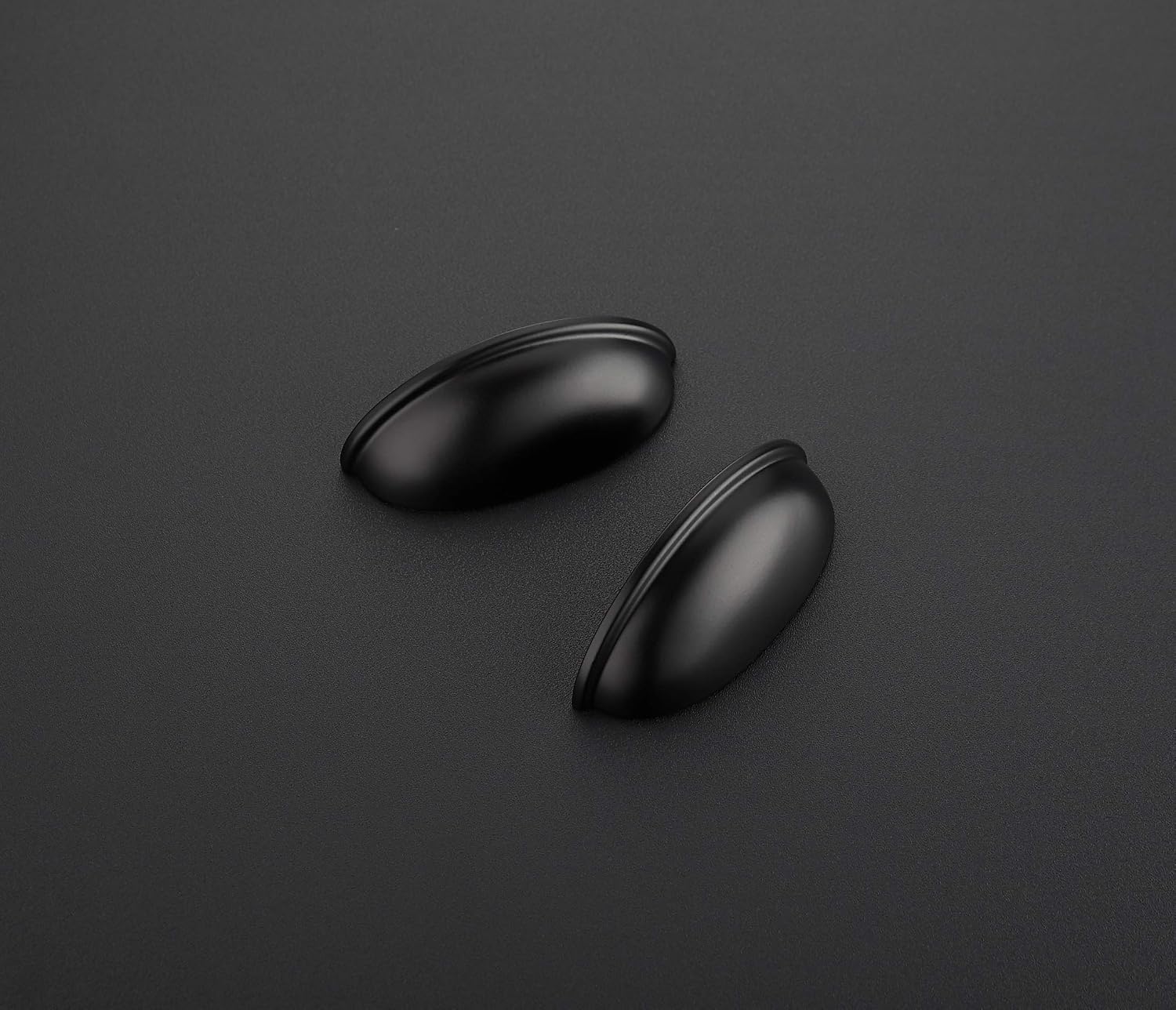
If you’ve ever stood in a hardware aisle holding a pull that looked like dark, aged bronze and thought, why does this one cost $4 and that one cost $40 when they look identical? — you’ve already found the right question. Oil-rubbed bronze, almost always abbreviated ORB on spec sheets and product listings, is a cabinet hardware finish that mimics the look of old, patinated bronze: a dark brown-black base with subtle warm highlights that show through at the edges and high-contact points. It’s enormously popular because it photographs beautifully, reads as high-end against both light and dark cabinet finishes, and — this is the practical part — it genuinely does a better job hiding fingerprints and everyday smudges than polished nickel or chrome. What the label almost never tells you is how that finish was created, what it’s sitting on top of, and how long it will look the way it does in the product photo. That’s what this guide is here to sort out.
What “Oil-Rubbed Bronze” Actually Means — and Why It Varies So Much
Here’s the honest starting point: “oil-rubbed bronze” is a look, not a material standard. There is no industry specification that locks down what an ORB finish must be made of or how it must be applied. That matters enormously for anyone buying hardware for a $15,000 kitchen project or sourcing pulls across six concurrent flips.
Under an ORB finish, you’ll typically find one of three base metals:
Solid brass is the premium tier. Brass is dense, machines cleanly, takes plating and applied finishes well, and — most importantly — if the surface finish wears through over time, the brass underneath ages gracefully rather than rusting. This Old House’s hardware guidance consistently points to solid brass as the benchmark for longevity in cabinet hardware, specifically because of this “wear-through” behavior.
Zinc alloy (often called zamak) is the workhorse mid-tier. It’s heavier than it looks, takes detail casting well, and holds a plated finish reliably when the plating is done correctly. Most of what you’ll find in the $4–$12-per-pull range at big-box stores is zinc alloy. It performs fine in typical indoor cabinet use — the failure mode isn’t structural, it’s cosmetic: if the ORB coating chips or wears through, the silver-grey zinc underneath creates a stark visual contrast.
Iron or steel shows up in some ORB pulls, particularly those styled after wrought-iron aesthetics. The concern here is surface rust at edges and mounting holes if the protective coating is breached. Family Handyman’s hardware installation guidance specifically flags unprotected iron-core pulls in high-humidity environments (bathrooms, laundry rooms) as a risk category.
The ORB color itself is typically applied as one of three methods:
-
PVD (Physical Vapor Deposition) — a vacuum-chamber process that bonds a very thin but extremely hard metallic coating directly to the substrate. PVD ORB finishes are the most durable and the most expensive to produce. Manufacturer spec sheets that call out PVD are being specific and that specificity is meaningful.
-
Electroplating with a topcoat — the finish is built up in layers: a base plate (often nickel), then a bronze-toned plate or chemical patina, then a clear lacquer or wax topcoat to protect it. The topcoat is what determines how long the finish looks right. Quality varies enormously here.
-
Spray-applied paint or epoxy coating — common on the lowest price tier. It looks convincing in a product photo and can last fine in low-traffic applications (upper cabinet pulls nobody touches 50 times a day). On drawer pulls that get heavy daily use, Apartment Therapy’s finish comparison work notes that paint-over-zinc or paint-over-iron hardware typically begins showing wear at the high-contact points within 18–36 months.
By the Numbers: What You’re Actually Paying For
| Price tier (per pull/knob) | Typical base metal | Finish method | Expected wear timeline (heavy use) |
|---|---|---|---|
| $2–$6 | Zinc alloy or iron | Spray coat or thin electroplate | 1–3 years before visible wear |
| $7–$15 | Zinc alloy or brass-washed zinc | Electroplate + lacquer topcoat | 4–8 years typical |
| $16–$35 | Solid brass or quality zinc | Electroplate + quality topcoat, or PVD | 8–15+ years |
| $36+ | Solid brass | PVD or premium applied finish | 15+ years; wear-through ages gracefully |
Ranges reflect mid-2026 market pricing across major hardware suppliers. A standard 10×10 kitchen typically requires 30–40 pulls and knobs, so the delta between the $6 tier and the $25 tier is roughly $570–$760 per project — a meaningful but not prohibitive gap when framed against total project cost.
The Fingerprint Story: Why ORB Actually Works
This is the part that holds up under scrutiny. Polished nickel and chrome are highly reflective, which means oils and smudges catch the light at the same angle as the clean surface — they’re immediately visible. ORB’s dark, matte-to-satin surface scatters light differently, and the variegated patina pattern means a partial smudge simply blends into the finish’s natural variation.
Architectural Digest’s finish trend coverage notes this consistently: reviewers and designers favor ORB in households with children or in rental properties specifically because the “lived-in” aesthetic is part of the design intent, not a flaw. What reads as a dirty fingerprint on polished chrome reads as patina on ORB.
The catch — and this matters for anyone making a long-term recommendation to a client — is that ORB’s fingerprint forgiveness depends on the finish staying intact. A worn ORB pull with patches of exposed base metal doesn’t hide anything; it just looks damaged. This circles back to the base-metal and coating quality question above.
Owners on Houzz renovation forums who report hardware disappointment at the 2–3 year mark follow a consistent pattern: the hardware was sourced at the lowest price tier, installed in high-frequency-use drawers (below the cooktop, spice drawers, utensil drawers), and the coating failed at the grip contact point first. The ORB advantage disappears when the finish does.
What the Spec Sheet Won’t Tell You — and How to Ask for It
Most hardware spec sheets list finish name, base material (sometimes), dimensions, and mounting hole spacing. What they routinely omit:
Topcoat type and thickness. A lacquer topcoat and a PVD finish are described with equal confidence in product marketing copy. Ask vendors directly: “Is this PVD or a coated finish?” A rep who can’t answer that question is selling commodity hardware.
Salt spray hours. Quality hardware manufacturers will publish ASTM B117 salt spray test results — a standardized accelerated corrosion test. A 250-hour rating is baseline acceptable. 500+ hours indicates a finish that will hold in humid environments. Most budget hardware is never tested this way, which tells you something.
The “living finish” disclosure. Some ORB products are intentionally sold as living finishes — meaning the manufacturer acknowledges and markets the fact that the finish will continue to evolve over time. This is architecturally interesting and genuinely appropriate for certain design directions (traditional, farmhouse, craftsman). It is not appropriate if a client expects their hardware to look the same in year seven as it did at install. Architectural Digest’s coverage of living versus sealed finishes makes this distinction clearly, and it’s worth repeating to clients before they sign off on a spec.
Antimicrobial claims. Some ORB hardware carries EPA-registered antimicrobial claims (typically through a copper-alloy base). Others do not. If this matters for a project (healthcare-adjacent, high-traffic rental), it needs to be specified explicitly — “bronze finish” and “antimicrobial bronze alloy” are not the same thing.
ORB Against the Competitive Finish Field: Where It Wins and Where It Doesn’t
Since you’re likely comparing ORB against the current wave of matte black and brushed brass options, here’s the honest comparative frame:
ORB vs. Matte Black: Matte black is winning market share right now, particularly in contemporary and transitional kitchens. It hides fingerprints comparably well. The practical risk: matte black on a zinc substrate shows color shift (greening, browning) if the protective coating is compromised by harsh cleaners. ORB’s warm tones are more forgiving of minor finish variation. For traditional and farmhouse aesthetics, ORB reads more authentic. For contemporary spaces, matte black is the stronger design call.
ORB vs. Brushed Brass / Satin Brass: Brushed brass is having a clear design moment as of mid-2026, particularly in kitchens with white or sage cabinetry. It’s warmer than ORB and shows more clearly in photography, which matters for listings and portfolio work. Fingerprint visibility on brushed brass is moderate — worse than ORB, better than polished. If a client is resale-focused and trying to appeal to the widest buyer pool, either finish works; ORB skews traditional, brass skews transitional-to-current.
ORB vs. Brushed Nickel: Brushed nickel has spent years as the safe default. It pairs with almost everything and holds its value on resale. Its liability is exactly that universal blandness — it adds no design statement. ORB is a decision, not a default, and in the right kitchen (dark lower cabinets, wood accents, warm counters) it earns its position.
The Decision Rule
If you’re sourcing hardware for a project right now, here’s the clean if/then:
If the project has a traditional, transitional, or farmhouse design direction, the client has children or uses the kitchen heavily, and the budget supports the $15–$30/pull tier: ORB on a solid brass or quality zinc substrate with an electroplated or PVD finish is a very strong choice. It will photograph well for listings, hold up to daily contact, and age in a way that reads intentional.
If you’re sourcing for a flip or rental in the sub-$10/pull range: Use ORB only on upper cabinet knobs and less-trafficked pulls. Put a more durable, lower-maintenance finish — brushed nickel, matte black at the quality tier — on the high-contact drawer hardware below the counter. The ORB look costs you nothing at the upper cabinet; it just can’t survive the abuse at the lower.
If the design direction is contemporary or the client wants hardware that stays looking exactly the same for 10+ years with no patina development: ORB is the wrong call regardless of quality tier. Specify PVD matte black or PVD brushed nickel and be done with it.
The finish that hides fingerprints is only as good as the finish that stays on the hardware. Read the base-metal disclosure, ask about PVD or topcoat type, and match the quality tier to the actual use frequency. That’s the whole spec-sheet translation.