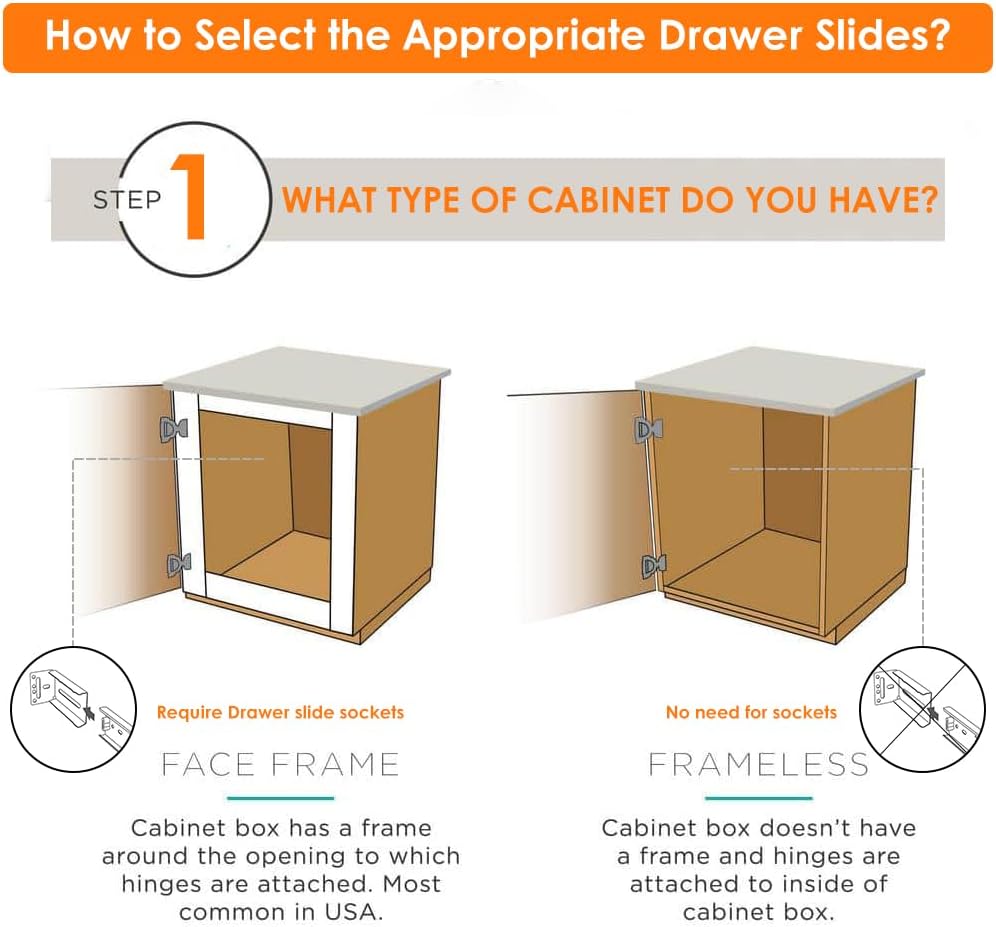
If you’ve ever opened a kitchen drawer that glided shut on its own with a quiet, satisfying click, you’ve already experienced soft-close hardware — the small mechanical feature that makes a cabinet feel expensive even when the box itself is budget-grade. “Soft-close” refers to a damper mechanism built into the drawer slide (the metal track system that lets a drawer roll in and out) that slows and cushions the final inch of closure so the drawer never slams. There are two main families: side-mount slides, which attach to the left and right interior walls of the cabinet box, and undermount slides, which hide completely underneath the drawer box and attach to the cabinet floor. Choosing between them isn’t just a taste call — it affects your interior dimensions, your drawer box construction, your labor cost, and, ultimately, whether the hardware you spec today holds up for a decade. This guide decodes both systems at a practical level so you can make the call with confidence before your order ships.
| EDITOR'S PICK[Chibery 12 15 18 21 Inch Underm…](https://www.amazon.com/dp/B0DK56FYSF?tag=greenflower20-20) | Mid-tier[LONTAN Soft Close Drawer Slides…](https://www.amazon.com/dp/B07FM5214C?tag=greenflower20-20) | Budget pick[OCG Soft Close Drawer Slides 22…](https://www.amazon.com/dp/B08D9JVR85?tag=greenflower20-20) | |
|---|---|---|---|
| Mount Type | Undermount | Side Mount | Side Mount |
| Load Capacity | 100 LB | 100 LB | — |
| Length Options | 12-21 in | 22 in | 22 in |
| Brackets Included | Rear Mount | — | Rear Mount |
| Pairs | — | 10 | 5 |
| Price | $118.14 | $110.48 | $52.71 |
| See on Amazon → | See on Amazon → | See on Amazon → |
Why the Mount Location Changes Everything
The geometry here matters more than most buyers realize going in.
Side-mount slides sit on either side wall of the cabinet opening. The slides themselves consume horizontal space — typically 1/2 inch per side, so 1 inch of total interior width — meaning your drawer box must be built 1 inch narrower than the cabinet opening. For a standard 18-inch base cabinet, your drawer box lands at 17 inches wide. The upside: installation is relatively forgiving. A homeowner or light-trade installer can align side-mounts with a simple measuring tape and a self-centering punch. Family Handyman’s drawer slide reference guide (“Drawer Slide Types Explained”) identifies side-mounts as the go-to spec for DIY and light-remodel work precisely because the margin for error during installation is wider.
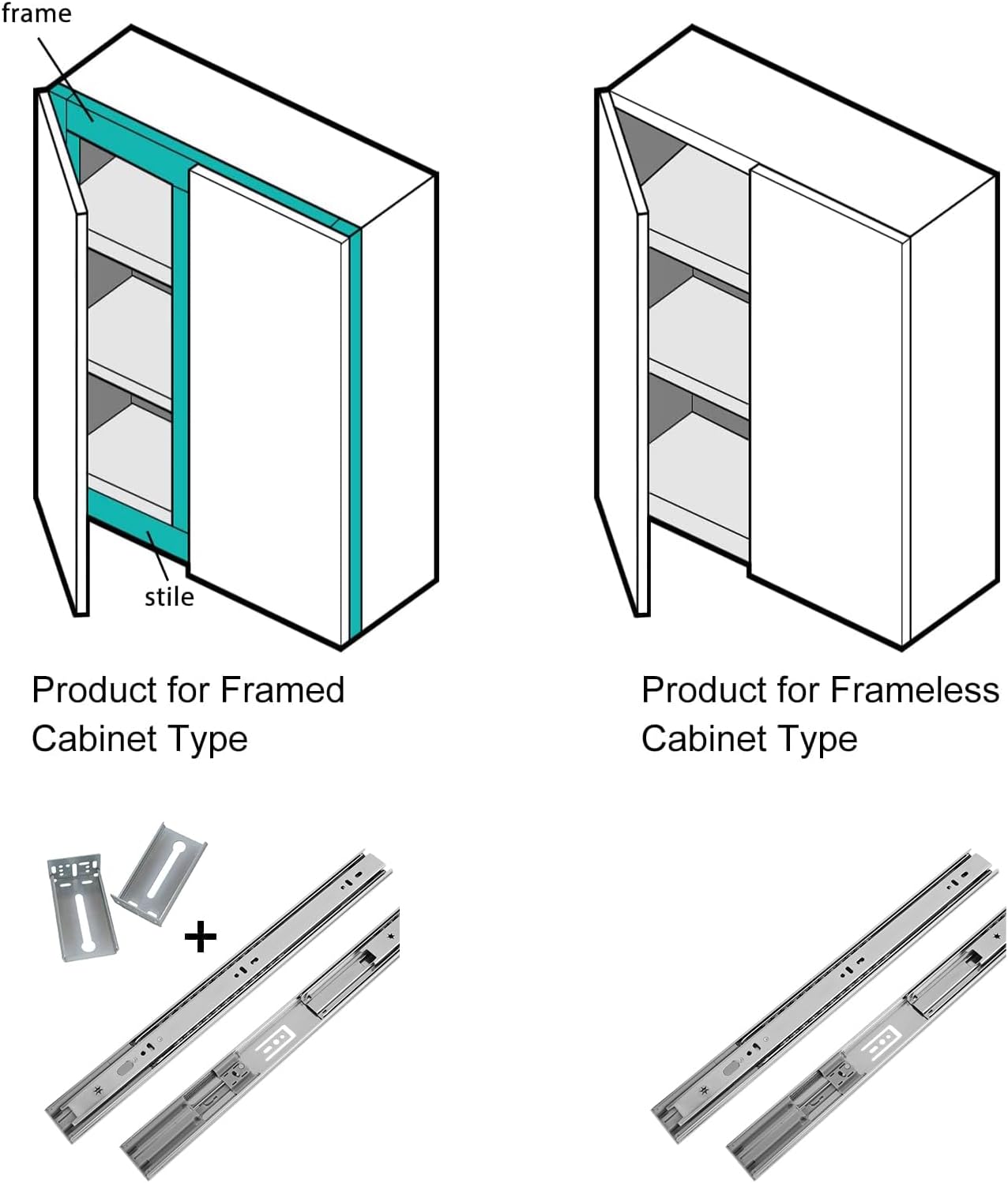
Undermount slides attach to the bottom of the drawer box and ride on a track screwed to the cabinet floor. Because they’re invisible in use, they allow you to maximize the interior width of the drawer box up to the full opening — critical when you’re fitting deep utensil dividers or full-extension organizers in a narrow cabinet. But here’s the tradeoff: undermounts require a drawer box built to a tighter tolerance. The drawer bottom must be a consistent, flat 5/8-inch or 3/4-inch panel — not the thin, stapled bottoms common in budget stock cabinets. If your box is warped or the bottom flexes, the clip mechanism that locks the drawer onto the undermount track will never seat correctly. Owners in Houzz’s aggregated hardware review threads (drawer slide category, 2023–2025) consistently flag this as the source of misalignment headaches: the slide isn’t the problem; the drawer box that shipped with the cabinet is.
The practical summary: If you’re retrofitting soft-close into existing cabinetry — a flip, a rental refresh, a partial kitchen update — side-mounts are almost always the faster, more forgiving path. If you’re spec’ing a new installation or replacing drawer boxes alongside hardware, undermounts deliver a cleaner look and better interior capacity, but they demand better-built boxes.
Reading the Spec Sheet: The Numbers That Actually Matter
Here’s what to look for when you’re comparing products or evaluating what a cabinet brand has pre-installed.
Key specs side by side:
| Spec | Side-Mount (typical) | Undermount (typical) |
|---|---|---|
| Weight capacity per pair | 75–100 lbs | 100–150 lbs |
| Extension type | Full (100%) or 3/4 (75%) | Full (100%) standard |
| Soft-close mechanism | Integrated or add-on clip | Integrated damper |
| Minimum drawer box clearance | 1/2” each side | 3/4” bottom panel required |
| Installation skill level | Beginner–intermediate | Intermediate–advanced |
Weight capacity is the spec most buyers underweight. The NKBA Kitchen & Bath Market Index (Q1 2026) notes that drawer storage — heavy pots, stand-mixer bowls, stacked plates — has become a dominant kitchen layout trend as lower-cabinet doors give way to full-drawer banks. A 75-lb-rated side-mount slide is adequate for utensils and light dry goods; it is not adequate for a pot drawer carrying cast iron. Blum’s TANDEM plus BLUMOTION specification sheet (2025 edition) rates that undermount system at 130 lbs per pair for the standard residential version — meaningfully higher than most side-mount competitors at the same price tier.
Full extension vs. 3/4 extension determines how much of the drawer you can actually access. Full extension (100%) means the drawer box rolls completely out of the cabinet box, giving you unobstructed access to items at the very back. Three-quarter extension leaves roughly the rear quarter of the drawer hidden inside the cabinet. For a 24-inch-deep base cabinet, that’s 6 inches of dead space. This Old House’s published cabinet hardware guidance (“How to Choose Cabinet Hardware”) specifically flags extension type as a spec to verify before purchase, not after delivery, because budget side-mount slides are frequently sold as 3/4 extension even when the packaging doesn’t call it out clearly.
The soft-close mechanism itself varies between manufacturers. Some side-mount slides integrate the damper directly into the slide body; others sell a separate clip-on soft-close adapter that adds roughly $3–$6 per drawer to your component cost. Grass America’s Dynapro Soft-Close Undermount Technical Data Sheet (2024) documents that their undermount system integrates the damper into the mounting clip assembly — which means the soft-close function cannot be accidentally separated from the hardware during installation the way an add-on clip can be. Owners in Houzz’s long-run review threads note that add-on soft-close clips on cheaper side-mounts are frequently the first thing to fail, usually around the 2–3 year mark under daily use.
Comparing the Three Budget Tiers
### Budget Tier: Add-On Soft-Close Side-Mounts
The hardware common in Hampton Bay and base-tier stock lines typically consists of side-mount slides with a separate clip-on soft-close adapter. Installation is accessible for a capable DIYer — Family Handyman’s “Drawer Slide Types Explained” guide places these firmly in beginner-to-intermediate territory. Per-drawer cost runs roughly $8–$15 per pair installed. On a standard 10×10 kitchen with 18 drawers, total hardware cost lands in the $144–$270 range.
The catch: the add-on damper clip is a separate failure point. Houzz’s aggregated owner reviews in the drawer slide category document a consistent pattern of clip failure at the 2–3 year mark under daily kitchen use. For a flip or a rental refresh where a 3–5 year hardware life is acceptable, this tier does the job. For a forever kitchen, it’s the wrong spec.
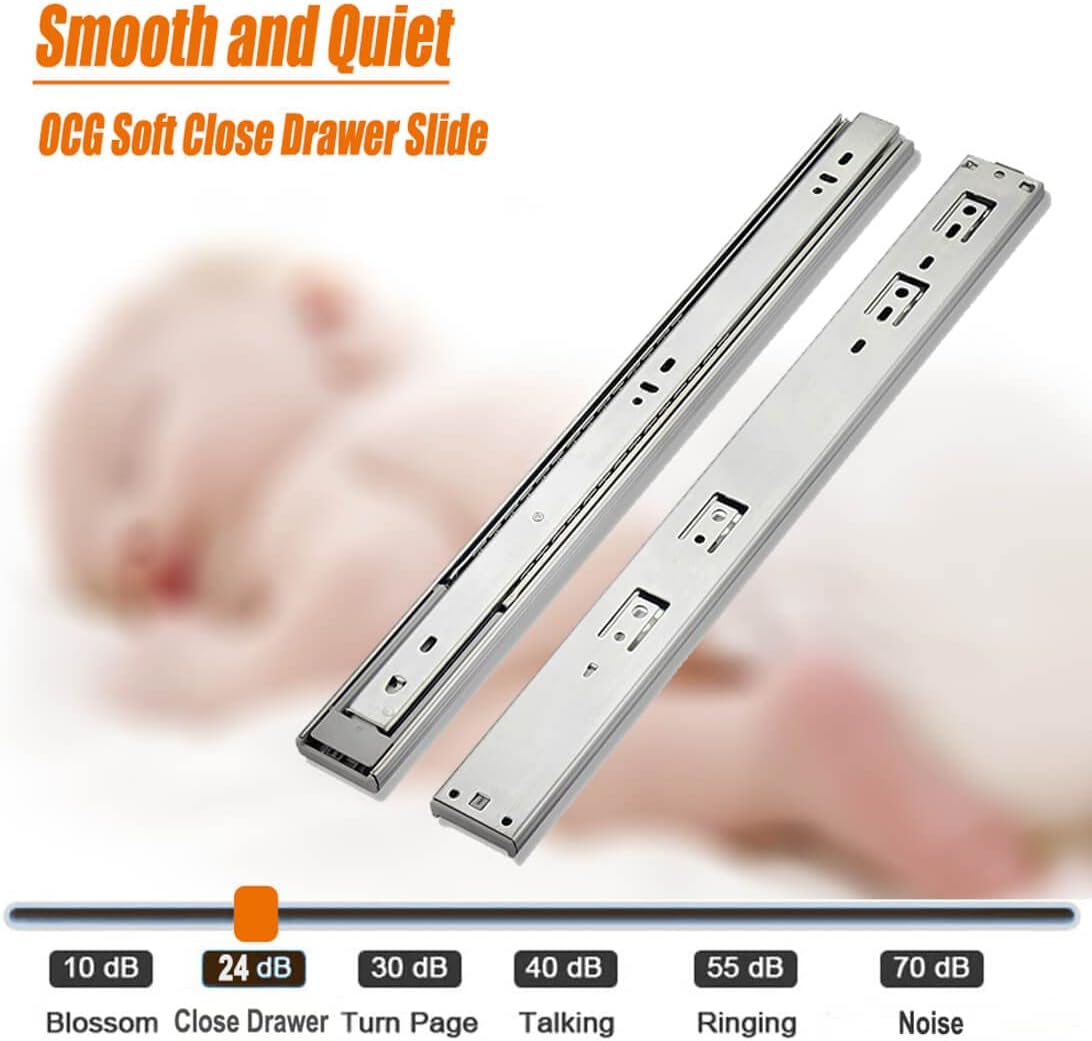
OCG
$52.71
In stock on Amazon
Check price on Amazon### Mid-Tier: Integrated Soft-Close Side-Mounts
Mid-grade RTA specialists — including the upper lines from brands like Lily Ann Cabinets and The RTA Store — now standardize integrated soft-close side-mounts with full extension as the baseline spec. The damper is built into the slide body, eliminating the separate clip failure point. Cost runs $18–$28 per drawer pair, or roughly $324–$504 for 18 drawers.
This is the sweet spot for contractors doing quick-turn projects. The install tolerance is similar to budget side-mounts, so retrofit time stays low, but the integrated damper meaningfully outlasts the clip-on version. This Old House’s cabinet hardware guidance identifies integrated soft-close side-mounts as the practical upgrade for homeowners who want noticeably better performance without a full cabinet rebuild. For house flippers and investors managing margin, this tier delivers the most perceived value per dollar.
LONTAN
$110.48
In stock on Amazon
Check price on Amazon### Premium Tier: Undermount Soft-Close Slides (Major Brands)
At the premium end, undermount soft-close slides from Blum, Grass America, and Häfele are standard spec — not optional upgrades — in semi-custom and designer-adjacent cabinet lines. Blum’s TANDEM plus BLUMOTION (2025 spec sheet) carries a 130-lb-per-pair rating and a fully integrated damper in the mounting clip. Grass America’s Dynapro system documents a similarly integrated design. Cost runs $35–$65 per drawer pair, landing a full 18-drawer kitchen at $630–$1,170 for hardware alone.
The absolute dollar gap between this tier and budget side-mounts on a single kitchen is roughly $500–$900. On a $12,000–$18,000 semi-custom kitchen project, that delta is under 5% of total project cost. Houzz’s aggregated owner reviews consistently show undermount soft-close slides appearing in buyer descriptions of kitchens that “feel high-end” even when the cabinet boxes themselves are mid-range — which is the core argument for the upgrade at this price tier. Dura Supreme’s published construction standards name Blum TANDEM plus BLUMOTION by name as their standard drawer hardware, a signal of how normalized this spec has become at the semi-custom tier.
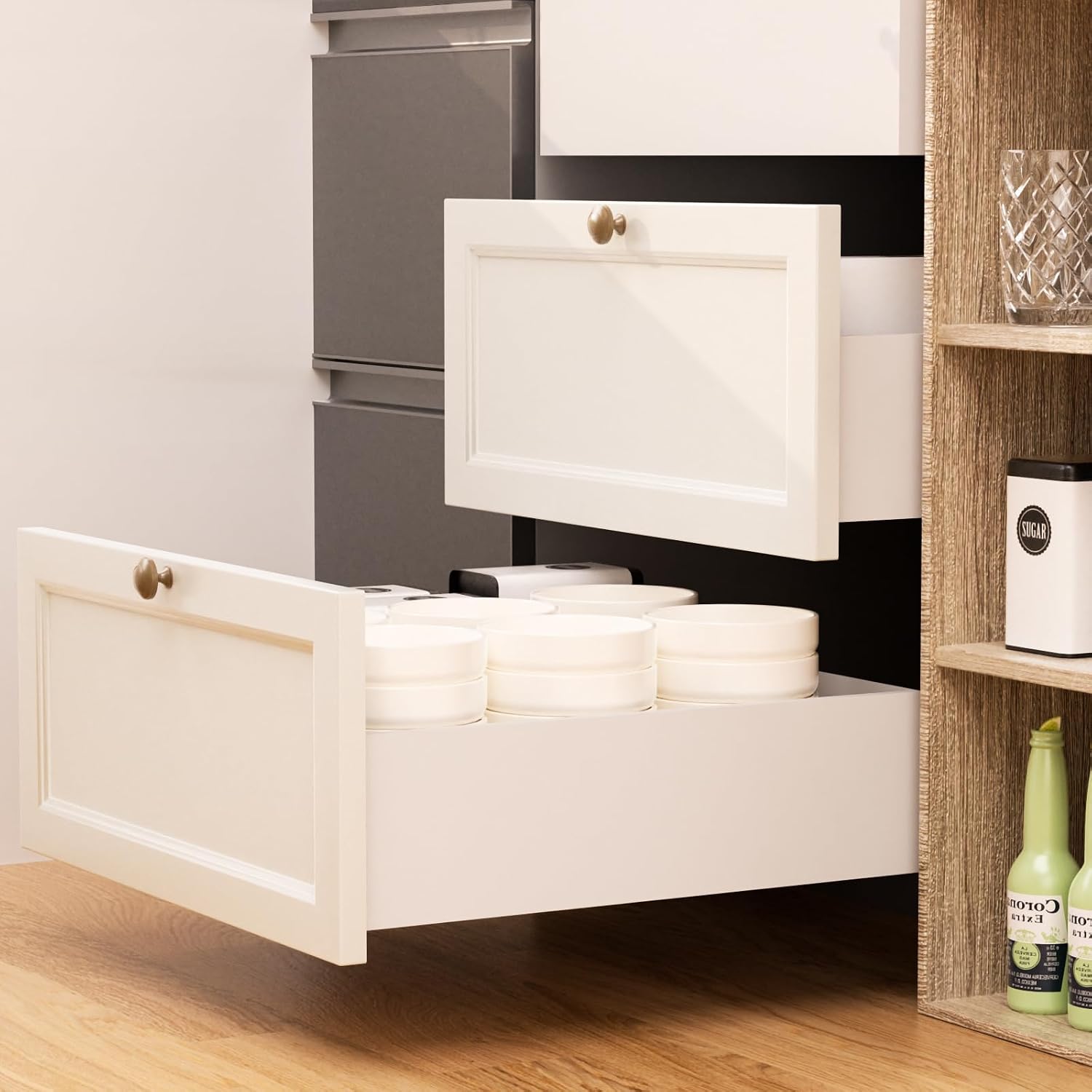
Chibery
$118.14
In stock on Amazon
Check price on AmazonCost in a Real Project Context
Let’s put the tier math in plain project terms, because per-unit pricing is nearly meaningless at the scale of a kitchen renovation.
A standard 10×10 kitchen layout — the industry benchmark for comparison pricing — typically includes 15 to 20 drawers depending on the cabinet configuration. Using 18 drawers as the baseline:
- Budget (add-on clip side-mount): $144–$270 total
- Mid-tier (integrated side-mount): $324–$504 total
- Premium (undermount, major brand): $630–$1,170 total
For contractors sourcing across multiple jobs, the volume pricing math on Blum and Grass undermount hardware is meaningfully better at 20-plus pair orders. Both manufacturers publish dealer pricing tiers — a direct conversation with your hardware distributor is worth having if you’re running three or more kitchen projects per quarter. The per-unit cost drops enough that you can spec undermount on mid-range jobs without blowing your margin.
The Decision Rule
Here’s the clean if/then frame for your current project:
If you’re retrofitting soft-close into existing cabinets — a flip, a rental unit, a partial kitchen update where the boxes stay — use integrated side-mount slides. Skip the add-on clip versions. The extra $8–$12 per drawer for integrated dampers pays back in fewer callbacks and longer functional life.
If you’re spec’ing new cabinets and your drawer boxes are being built to 3/4-inch plywood bottoms (which they should be at any mid-range or above build), undermount is the move. The install tolerance is tighter but the end product is cleaner, stronger, and — per aggregated owner feedback across Houzz’s hardware category — the hardware difference buyers consistently remember when they describe a kitchen as feeling premium.
If weight capacity is your constraint — pot drawers, heavy organizer inserts, utensil banks in a pro-style kitchen — verify the rated capacity before you order, regardless of mount type. A Blum TANDEM plus BLUMOTION rated at 130 lbs per pair is a fundamentally different product from a $9 side-mount rated at 75 lbs, and only one of them belongs under a drawer full of cast iron cookware.
The bottom line: soft-close is table stakes in 2026. The question is which system earns its place in your specific build — and now you have the spec vocabulary to make that call before it shows up on a packing list.